.png%3Fwidth%3D2400%26auto%3Dwebp%26quality%3D80&w=3840&q=75)
As retail media networks continue to scale, the effectiveness of their machine learning models depends on the data they're trained on. Do those models understand the unique dynamics of your category, catalog, and shoppers, or are they built on signals from entirely different retail environments? This is the question we explore in this blog, unpacking why domain-specific machine learning matters, how it works, and why it's becoming a foundational capability for retail media networks.
Retail media is now one of the most competitive areas in digital advertising. In 2026, U.S. advertisers are expected to spend $69.33B on retail media—up ~17.9% year over year—signaling continued budget shifts toward retail media as a core performance channel.
As spend and expectations rise, the performance gap between purpose-built and generic ad tech platforms becomes impossible to ignore, making domain relevance a decisive factor in machine learning performance.
That performance gap becomes clear when examining how customer behavior varies across retail verticals. If we look at buying behavior, we’ll see that grocery is defined by high frequency, seasonality, and basket complementarity, where purchase intent is contextual, repeat-driven, and highly sensitive to relevance at the moment of discovery. Similarly, for grocery-adjacent categories such as pet, pharma, and beauty, shopping behavior is driven by repeat purchases, replenishment cadence, and substitution sensitivity, making generic ad tech solutions less effective.
In contrast, categories such as furniture and apparel exhibit fundamentally different purchase dynamics. Furniture purchases are infrequent, highly considered, and unfold over long decision cycles, while apparel demand is driven by trends, seasonality, and fit preferences. An ad tech platform trained on signals from these industries might not be the best fit for capturing the high-frequency, intent-rich behaviors that drive conversion in grocery & adjacent-industries.
For retail media networks belonging to grocery and grocery-adjacent industries like pet, pharma, and beauty, choosing the right ad tech partner with deep industry expertise is critical. Traditional approaches force a binary decision: build expensive custom ML models or settle for generic platforms that miss grocery’s unique signals. Domain-adaptive learning leverages Machine Learning expertise that is drawn from grocery and grocery-adjacent industries.
What is Domain-Adaptive Learning?
At a high level, domain-adaptive learning is a form of transfer learning that applies knowledge learned in one environment (the source domain) to improve model performance in another (the target domain). In practice, this approach allows models to start with a strong foundation of learned patterns and then adapt to the unique data, behaviors, and contexts of the target environment—reducing the need to train entirely new models which might be challenging given data limitations while delivering more accurate and relevant outcomes.
For grocery and adjacent-category retailers—including Pet, Pharma, and Beauty—this means access to machine learning models that already understand the dynamics of high-frequency retail such as seasonality, substitution behavior, and complementary product relationships. These models then adapt to the unique characteristics of each retailer’s assortment, customer base, and factors that drive purchasing decisions.
As a result, retailers benefit from more relevant ad experiences for their customers, without the overhead of building and maintaining custom ML models.
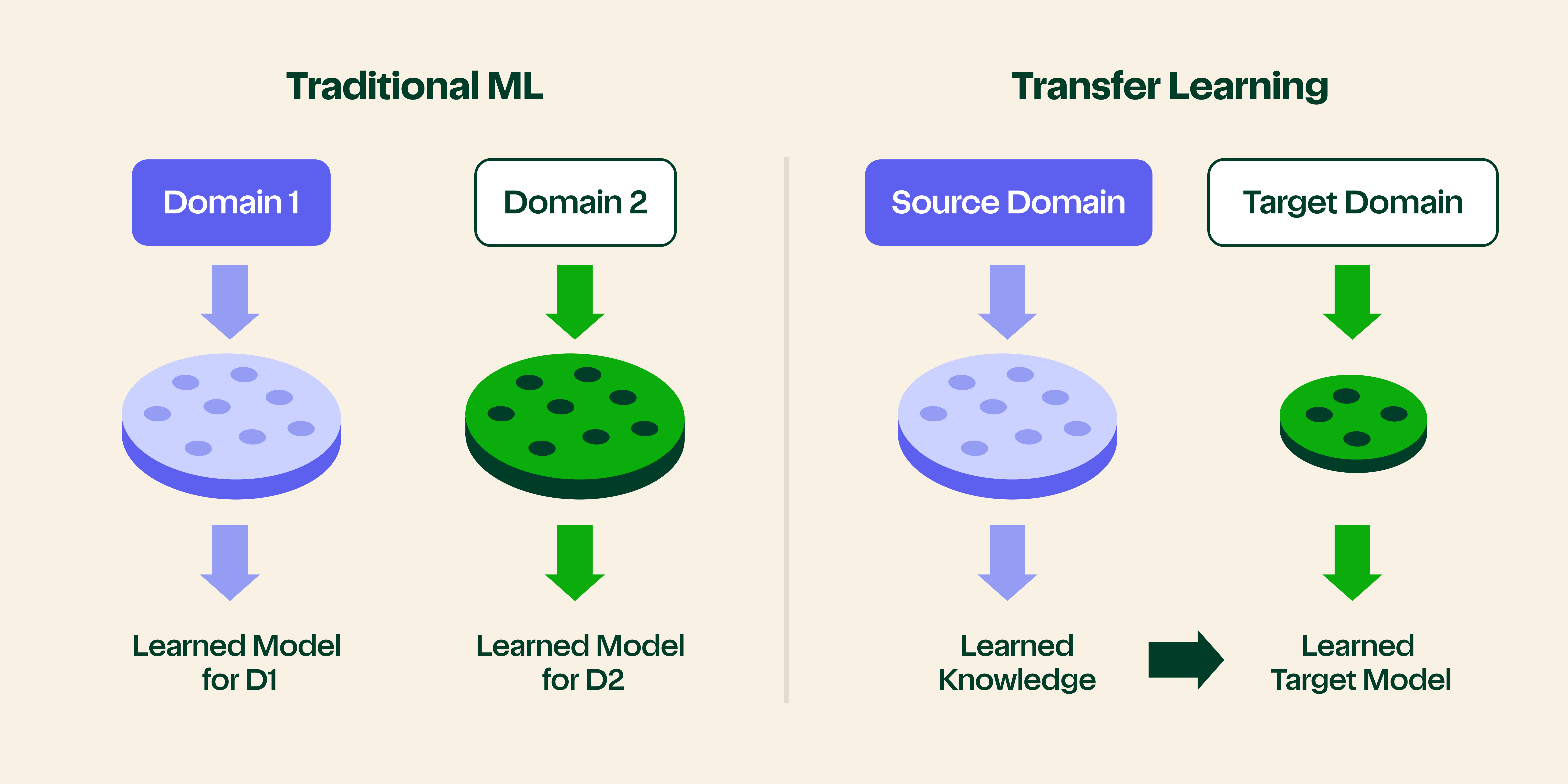
When we take a step back and examine the different transfer learning methodologies that can be applied within machine learning models, we find that there are four main types of transfer learning approaches, each with distinct applications for grocery and grocery-adjacent industries:
- Inductive transfer learning: Inductive transfer learning applies knowledge learned from one prediction task to improve performance on a related task when labeled data is available. For example, insights from a model trained to predict user clicks can be adapted to predict attributed sales or revenue. This allows new optimization capabilities to ramp more quickly without starting from scratch, enabling faster performance gains at scale.
- Domain adaptation: Domain adaptation fine-tunes models for a specific target environment while leveraging insights from the broader ecosystem. Models are customized for each retailer’s unique consumer base, product assortment, and local context, while still benefiting from knowledge gained across the broader ecosystem. This preserves the nuanced understanding of the behaviors of the ecosystem while adapting to each retailer’s unique data and shopper behavior patterns.
- Unsupervised transfer learning: Unsupervised transfer learning identifies patterns in data without using labeled examples. When labeled ad data is limited, it can uncover consumer and product patterns to deliver personalized, high-performing ads without requiring extensive upfront labeling. Especially useful where product catalogs are extensive and constantly evolving, this approach reveals complementary purchase patterns that drive conversion.
- Transductive transfer learning: Transductive transfer learning adapts a model to a new domain where the task is the same, but no labeled data exists for adaptation. This allows models to be used by customers who absolutely cannot share any data or have severe data scarcity issues.
.png)
Why Domain-Adaptive Learning Matters for Grocery & Grocery-Adjacent Categories
Domain-Adaptive learning helps address a challenge facing grocery, pet, pharma and beauty retailers today. Traditionally, ad models relied heavily on large, retailer-specific datasets to perform well. When that data is sparse—as is often the case for new or smaller networks—there could be a potential performance gap.
.png)
This is a gap that domain-adaptive learning helps close by transferring learning from an existing domain and adapting to each retailer’s environment. This allows retailers to deliver highly relevant ad placements on their owned-and-operated e-commerce sites immediately, even with modest initial data.
How Carrot Ads leverages Domain-Adaptive Learning
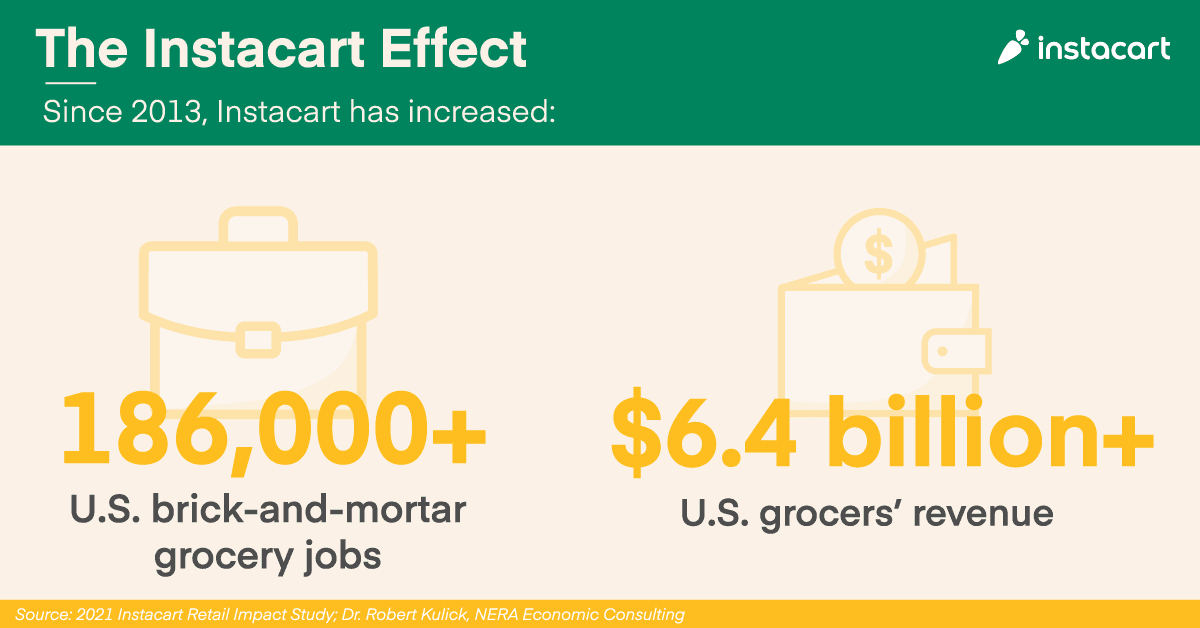
Domain-adaptive learning is integral to how Carrot Ads delivers ad experiences across retailer’s owned and operated sites. The model learns from the transaction behaviors across grocery and grocery-adjacent industries from the 2200+ partners with storefronts on the Instacart Marketplace.
This is a rich dataset of billions of shopping transactions that contains the nuances of seasonality, basket-building, and high-frequency purchase behavior — signals that generic ad platforms often lack. Then, this learning is fine-tuned and adapted to each retailer’s unique assortment, shopper behavior, and local context.
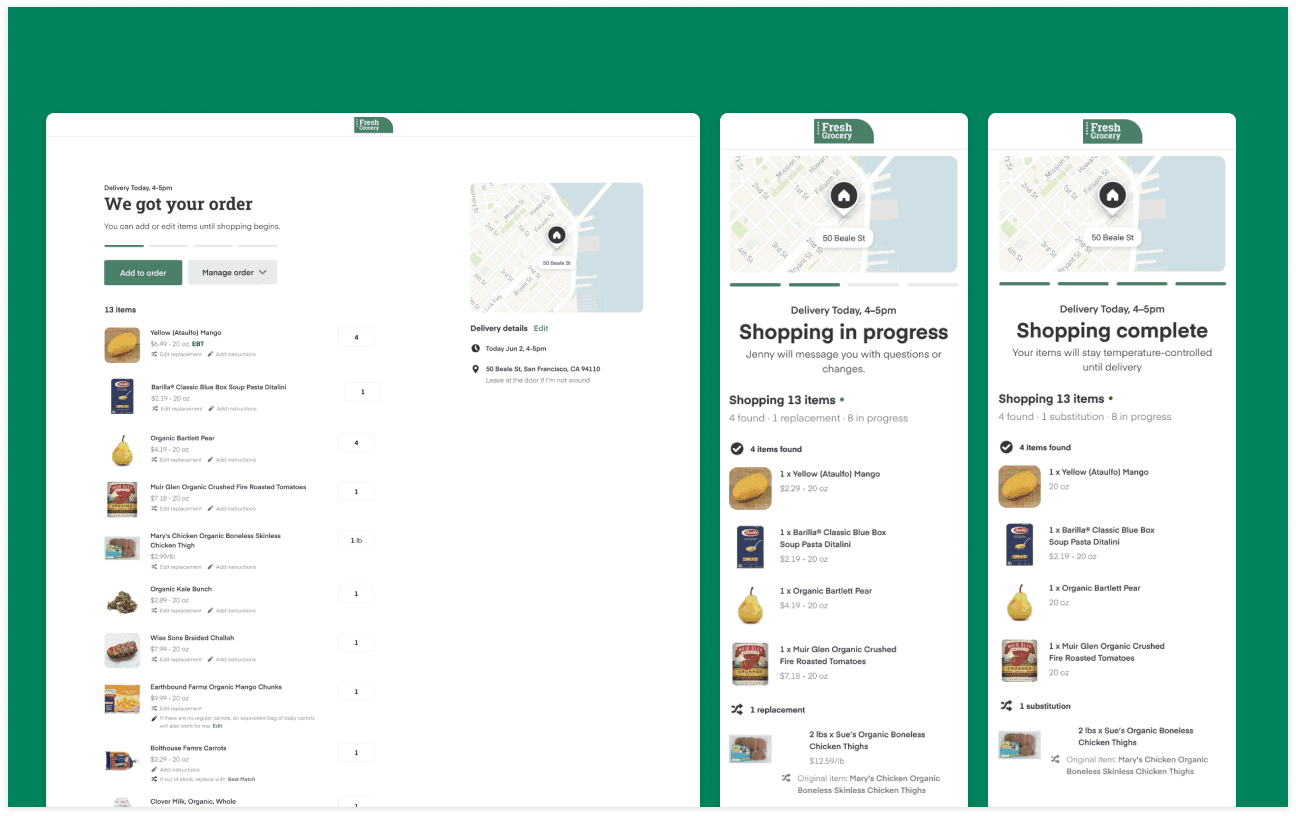
This is how Domain adaptive learning ensures that Carrot Ads delivers relevant, high-performing ads for retailer sites and it allows retail partners who use Carrot Ads to deliver digital ads on their own storefronts—whether through Instacart Storefront, Storefront Pro, or the Carrot Ads API — to leverage Instacart's marketplace intelligence.
The Business Impact of Domain-Adaptive Learning
The technical advantages of domain-adaptive learning translate into tangible benefits for retailers that choose Carrot Ads as their advertising technology platform. Typically we see impact across three areas with retailers who leverage Carrot Ads*:
Rapid monetization & ad relevance: Retailers can start generating revenue relatively quickly, while customers see products that match their intent, elevating their experience and reinforcing trust in the retailer’s digital storefront.
Advertiser confidence & customer engagement: Relevant ads can drive more clicks, deeper exploration, and higher conversion, creating a virtuous cycle where customers feel understood, brands see results, and retailers enhance the value of their owned channels. When brands see strong campaign performance, they are more likely to invest larger budgets and long-term commitments.
Operational efficiency: Retailers can achieve enterprise-grade performance without large engineering teams or machine learning infrastructure, allowing them to focus on strategy, partnerships, and growth.
Data privacy: With Domain-Adaptive Learning, retailers’ data can be isolated and only used in the adaptation step preserving higher levels of data privacy.
These business impacts demonstrate why domain-adaptive learning is essential for grocery and grocery-adjacent retailers competing in today’s retail media landscape.
*Carrots Ads performance across active retailers in 2025-2026. Past results do not guarantee future outcomes.
Moving Forward With Domain-Adaptive Learning
For retailers & retail media networks, domain-adaptive learning enables innovation and scalability that would be impractical with traditional approaches. As the retail media landscape evolves, Carrot Ads continues to advance its domain-adaptive capabilities to simplify workflows, reduce manual interventions, and accelerate retailers' ability to leverage learning across diverse retail applications.