When shopping for groceries, you’ve likely had to choose between organic vs non-organic options — and wondered what that choice actually means for your family, your budget and the environment. As more labels show up on everyday items, many families want a clearer understanding of what they mean and how they impact how food is grown and priced.
Below, we'll break down the key differences to help you make more informed shopping choices. We'll also share what to consider when it comes to cost, availability and more when weighing the pros and cons of organic food.
What does an organic label really mean?
“Organic” refers to food produced using farming practices that limit synthetic pesticides, fertilizers and genetically modified organisms (GMOs) while supporting soil and resource management.
In stores, organic labeling is regulated and all organic products must be USDA certified. When buying, check for the USDA Organic seal to ensure standards are met. You can also filter search results on Instacart to find organic options from different local retailers, supporting sustainable grocery delivery.
Here’s a quick breakdown of common organic label categories according to USDA organic labeling standards:
100% organic: All ingredients are certified organic
Organic: At least 95% of ingredients are organic
Made with organic ingredients: At least 70% of ingredients are organic
Contains organic ingredients: Less than 70% organic; specific ingredients may be listed as organic
Organic vs. non-GMO: What's the difference?
A GMO is a plant or animal whose genetic material has been altered using biotechnology. When comparing organic vs. non-GMO, the key difference is scope — organic foods cannot contain GMOs and must meet additional farming and production standards. Non-GMO products simply indicate that genetically modified ingredients were not used, but they can still be produced using conventional farming methods.
Regardless of non-GMO vs. organic labeling, all food sold in the U.S. must meet safety standards for pesticide residues. It's still wise to wash all produce thoroughly before eating, whether it’s organic or not.
6 key differences between organic and non-organic food
To compare organic vs. non-organic food, it helps to look at a few core factors that shape how products are grown, raised and sold. From farming practices to pricing at checkout, these differences influence what you see on food labels.
Organic food | Non-organic food | |
Pesticides and herbicides | Limits synthetic pesticides and herbicides | May use synthetic pesticides and herbicides to protect crops and control weeds |
Genetically modified organisms (GMOs)
| Not allowed at any stage of production | May use genetically modified seeds to improve yield or pest resistance |
Soil health and environmental impact | Focuses on soil-building practices like composting and cover crops; aims to support biodiversity | Often uses synthetic fertilizers for faster growth; may contribute to higher environmental impact |
Livestock living conditions and hormones | Animals must have outdoor access, organic feed and no growth hormones | Standards vary; may include indoor housing and use of hormones or antibiotics in some cases |
Cost | More expensive due to smaller-scale production and certification costs | Generally more affordable due to large-scale production and efficiency |
Preservatives and shelf stability | Fewer synthetic preservatives and artificial ingredients; may have shorter shelf life | May include preservatives that extend shelf life and maintain appearance |
1. Pesticide and herbicide applications
A key difference in organic vs. non-organic fruit and food is how farms manage pests and weeds. Conventional farming may use synthetic pesticides and herbicides to protect crops, while organic farming opts for naturally derived substances. Organic farmers also use methods like crop rotation and beneficial insects to manage pests instead of relying on chemicals.
While both organic and non-organic foods are regulated and considered safe to eat, organic options may help reduce your exposure to synthetic pesticide residues.
2. Use of genetically modified organisms (GMOs)
Another difference in organic vs. non-organic food is how GMOs are used. Organic certification doesn't allow GMOs to be used during food production. This means you won't find any bioengineered ingredients in organic foods.
In conventional farming, GMO seeds are typically used to help crops grow more efficiently. These seeds are designed to resist pests or tolerate certain herbicides in order to increase crop production.
3. Soil health and environmental impact
Organic farming focuses on building long-term soil health using methods like composting and cover cropping, which help improve soil structure and nutrient balance over time.
In contrast, conventional farming often relies on synthetic nitrogen fertilizers to support faster crop growth. These approaches can also impact nearby ecosystems. Conventional farming may contribute to water runoff from synthetic fertilizers, which can affect rivers, lakes and other waterways.
Organic practices aim to reduce this impact by using more natural inputs and soil-building techniques. Here are some of the environmental benefits of organic farming:
Improves soil health: Organic farming builds soil through compost, crop rotation and cover crops, which help maintain nutrients and structure.
Reduces water pollution: Limiting synthetic fertilizers can help decrease runoff that may impact waterways.
Promotes biodiversity: By avoiding pesticides, organic farming can help support pollinators like bees and other beneficial insects.
If environmental impact matters to you, this could be one reason to lean toward organic options.
4. Livestock living conditions and hormones
Another key difference is how animals are raised and fed. Organic standards require animals to have access to the outdoors and be fed 100% organic feed. They also can't be given growth hormones or preventative antibiotics. These requirements shape how animals are raised from start to finish.
When comparing organic vs. non-organic milk, these production standards are a key difference across different types of milk. Similar differences apply to organic vs. non-organic eggs:
Organic egg-laying hens must have outdoor access
They are fed 100% organic feed
Conventional systems don’t require these standards and may use hormones to increase milk production
5. Average cost at the checkout
Organic farming often requires more hands-on work and smaller-scale operations. Because of this, it’s typically more expensive than non-organic food, which benefits from mass production efficiency.
To manage your average cost of groceries, consider buying organic for certain items and choosing conventional options for others. This lets you balance your priorities while staying within budget.
6. Preservatives and shelf stability
Organic processed foods typically contain fewer synthetic preservatives and artificial colors, following stricter ingredient standards. Because of this, some organic items — like breads or snacks — may have a shorter shelf life compared to non-organic foods.
This can affect how you shop and manage your food storage at home. For example, you may find yourself buying smaller quantities more often. Learning simple habits like how to store fruit and how to store vegetables can help extend freshness and reduce waste, especially when stocking up on organic items.
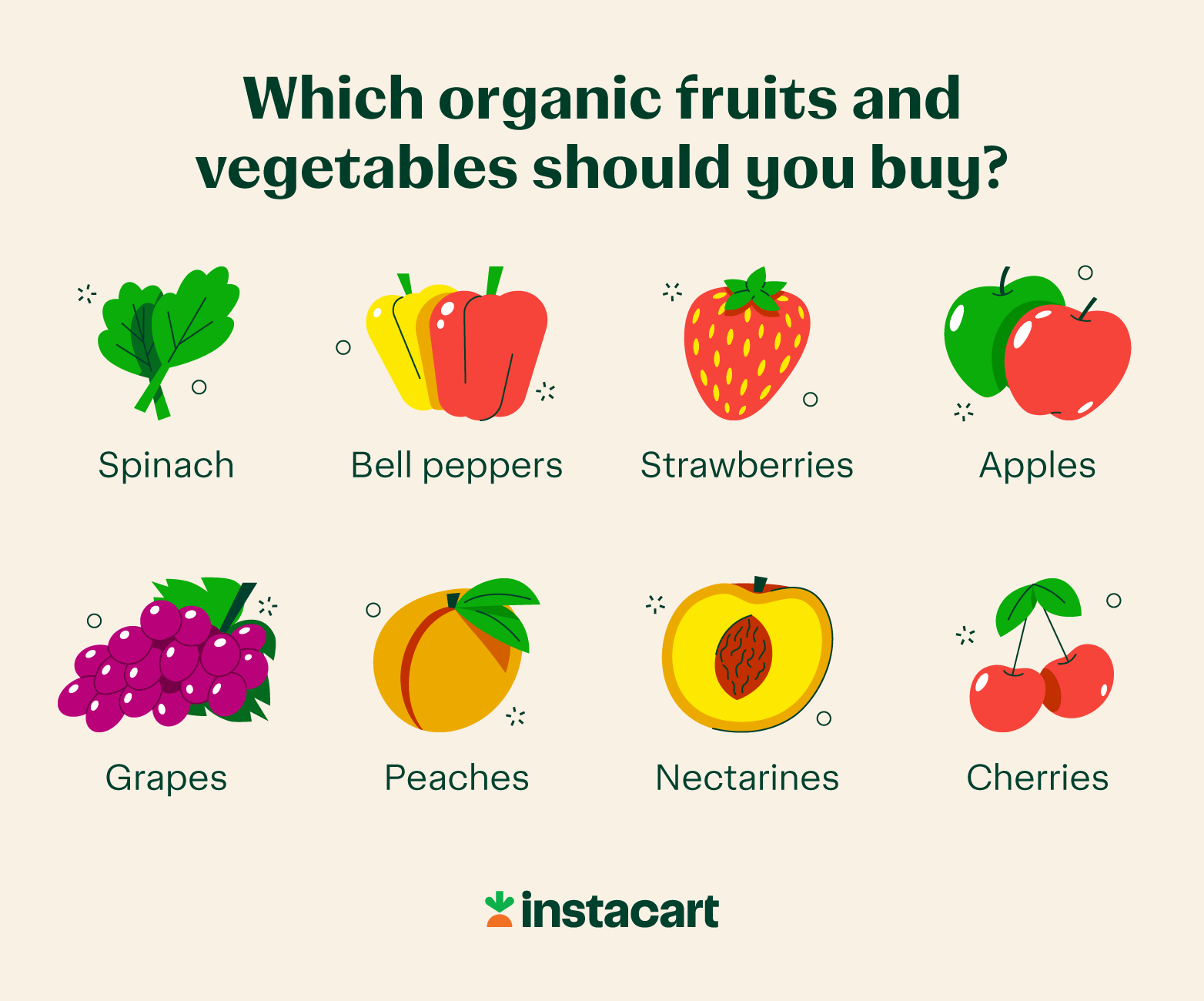
Which organic fruits and vegetables should you buy?
When choosing which organic foods to buy, start with produce that tends to have higher pesticide residue levels when conventionally grown. Foods with thin or edible skins are more directly exposed to sprays. Because of this, many shoppers — depending on their dietary preferences — choose organic for these first:
Strawberries
Spinach
Apples
Grapes
Peaches
Nectarines
Cherries
Bell peppers
On the flip side, produce with thick peels or skins you don’t eat tends to have lower residue levels, so many shoppers consider them to be lower priority for organic shopping. This includes foods like avocados, bananas, pineapples, onions, mangoes and sweet corn.
Organic vs. non-organic FAQ
Still have questions about organic vs. non-organic food? Find answers below.
Which is better for you, organic or non-organic?
There isn’t a clear-cut answer. Research shows that organic and conventional foods are generally similar in nutrient content, so what matters most is eating a variety of fruits and vegetables consistently.
Some studies suggest that choosing organic may reduce exposure to pesticide residues, but the long-term impact of this difference is still being studied.
What are the pros and cons of organic food?
Organic food comes with a few key tradeoffs to consider. On the plus side, it's produced without GMOs, can lower your exposure to synthetic pesticides, and promotes better biodiversity and soil health in the environment.
On the downside, organic foods are typically more expensive, may have a shorter shelf life for some packaged items and can be less widely available depending on location or season.
Is non-GMO as good as organic?
Non-GMO and organic labels cover different things. Non-GMO means a product doesn’t contain genetically modified ingredients, but it doesn’t address how the food was grown.
Organic standards go further by also restricting synthetic pesticides and fertilizers and include additional requirements for farming practices and animal care. Because of this broader set of guidelines, organic labels are more comprehensive than non-GMO labels; whether or not one is better than the other depends on your values and priorities.
Why are organic foods more expensive than non-organic foods?
Organic foods tend to cost more because they require more labor-intensive farming methods, smaller-scale production and certification to meet USDA standards. These factors can increase the cost of growing, handling and distributing organic products.
In contrast, conventional farming benefits from large-scale production and efficiency, which helps keep prices lower.
Shop for fresh organic produce on Instacart
Understanding the differences between organic vs. non-organic food comes down to how products are grown, raised and priced. Organic options can expose you to fewer pesticides while focusing on soil and resource management, while conventional methods often prioritize efficiency and scale.
Weighing the pros and cons of organic food depends on your household's priorities and budget. Use Instacart to easily find a wide selection of both options from local retailers all in one place, so you can order delivery with confidence.
Disclaimer: Instacart does not verify or make representations regarding “organic” claims on products sold through our platform. Third-party brands are solely responsible for ensuring their products meet applicable organic standards.