After months of testing, our AI assistant has rolled out to millions of Instacart U.S. customers
Grocery AI is having its moment. We've spent the past 14 years making sure we'd be ready to lead it.
Our AI-powered shopping assistant — built directly into our Marketplace — turns a conversation into a complete, personalized, ready-to-buy grocery cart in just seconds. Tell it what you want to make, upload a photo of your grocery list, or ask what's on sale, and it builds a complete cart based on live inventory from your local store.
After months of testing, it's now available to millions of U.S. customers, with a full rollout across the U.S. and Canada planned in the coming months.
Purpose-built for grocery, from the ground up
In grocery ecommerce, the margin for error is razor-thin — tens of millions of unique items, availability that shifts by the hour, and families with their own unique tastes, budgets, and routines. Get a recommendation wrong, and you've lost someone. A capable AI tool isn't enough. You need years of grocery-specific expertise to make grocery AI work.
Our assistant is built on more than a decade of grocery-specific machine learning and data infrastructure: more than 1.6 billion lifetime orders, and live inventory data from nearly 100,000 stores across North America.1 It's that data advantage that means every cart reflects what's actually in stock at your store, tailored to how your household shops.
Our proprietary ML models are purpose-built for grocery — covering search, recommendations, and availability — and informed by household-level signals across millions of consumers and thousands of retail banners. The result is a smarter basket, built around what your household loves, what’s on sale and what you actually need to pull a meal together. This is grocery personalization at its best.
A new kind of shopping experience
An Instacart-commissioned survey conducted by The Harris Poll among more than 2,000 U.S. adults helps explain the opportunity: 83% of Americans say figuring out what to make for dinner causes them stress, and nearly a third say the hardest part isn't the cooking itself — it's deciding what to make. More than two in three say they'd be interested in an AI-powered assistant that could help, but just 8% currently use AI for meal planning or grocery shopping.2 That gap exists because the right experience hasn't existed yet.
Our AI assistant lives directly in the Instacart experience, making grocery shopping faster and more personalized. Consumers can interact with it in whatever way is easiest — asking a question in natural language, tapping suggested prompts and quick-reply buttons, or uploading a photo — and it turns that intent into a real, ready-to-buy cart.
A message like "easy weeknight dinners for four," "find deals on my usual items," or a photo of a handwritten grocery list becomes a personalized cart grounded in live inventory from the consumer's preferred retailer, in just seconds. The experience is built around the ways busy households most often think about their groceries:
- Meal planning: Describe what you want to make, and the AI assistant generates personalized recipe suggestions with shoppable ingredient lists, reflecting what's actually available at your chosen retailer.
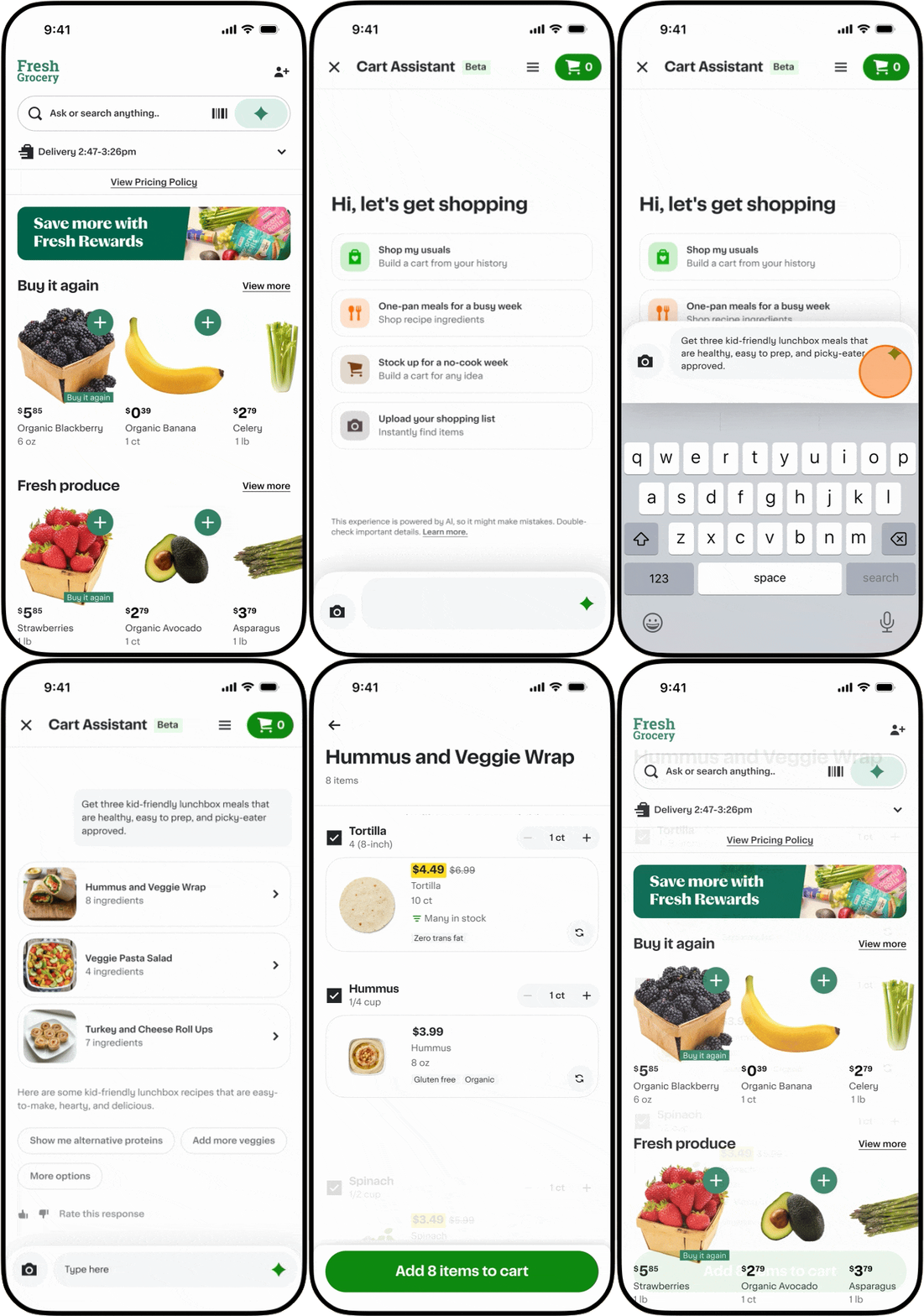
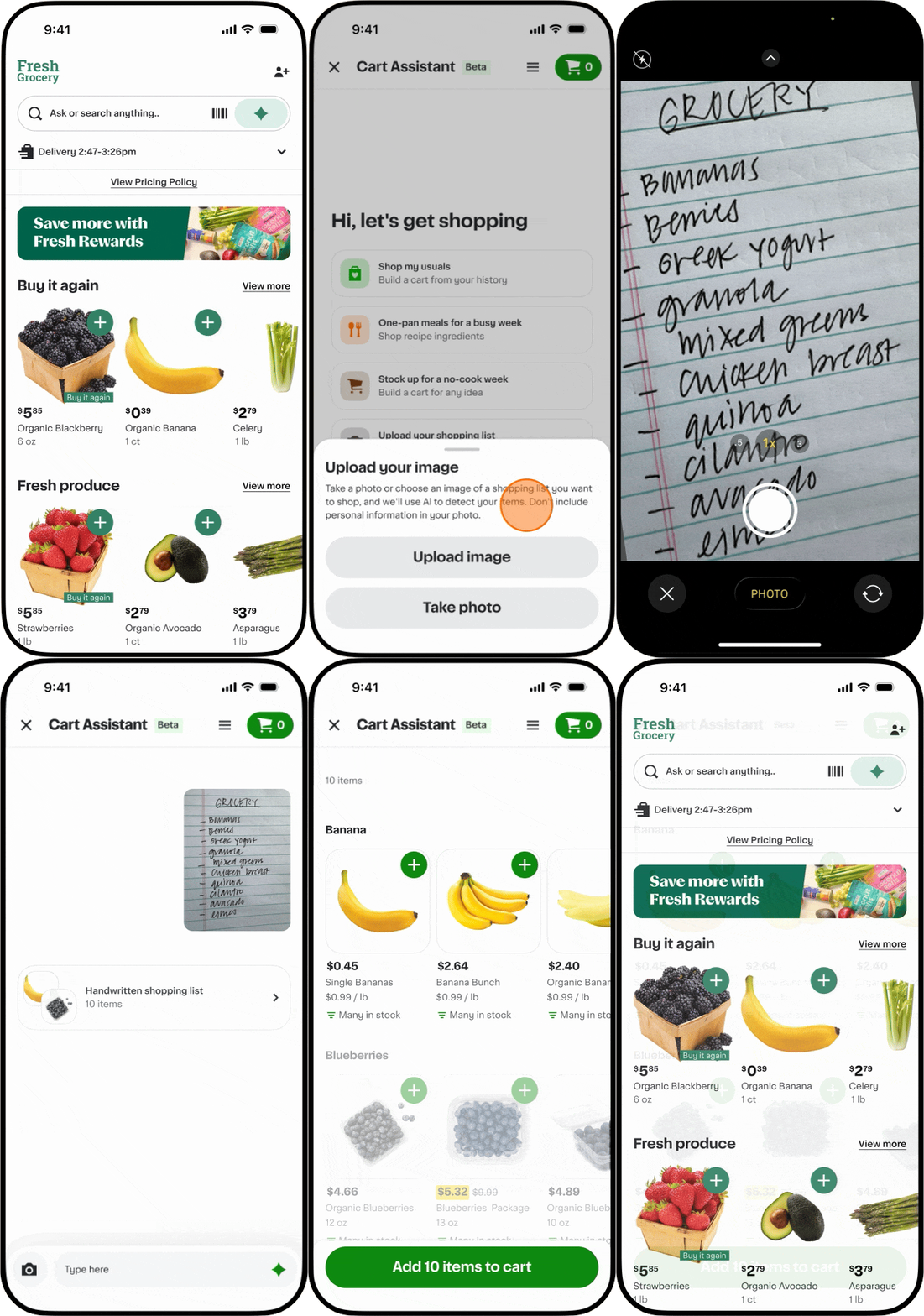
- Grocery list upload: Snap a photo of a handwritten list or screenshot a digital one, and the tool translates it into a complete, ready-to-shop cart — no item-by-item searching required, saving time.
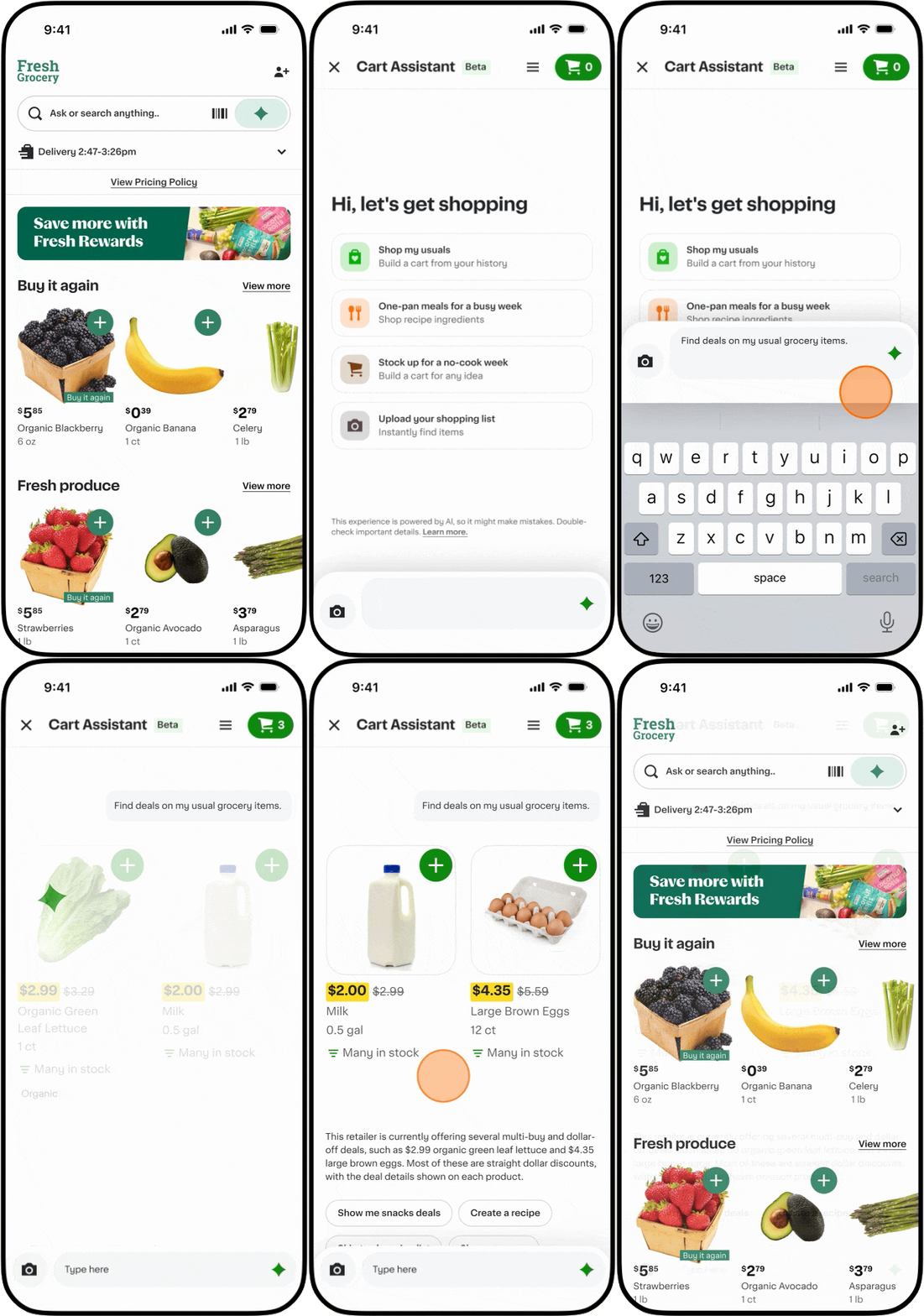
- Deals and savings: Ask to "find deals on my usual items," "what's on sale this week," or “everything I need for a backyard BBQ for 10 people under $100," and the AI assistant surfaces relevant promotions, lower-cost options and budget-friendly lists from your chosen retailer.
- Occasion shopping: From "appetizers for a graduation party" to "what I need to host a football watch party for five adults,” the assistant builds a full, curated cart around the occasion, adapting to established brand preferences and dietary choices.
- Personalized: Our AI assistant doesn't start from scratch. It draws on your Instacart order history, your Smart Shop preferences, and everything it learns from each interaction — so it already knows the brands you love, the staples you restock, and the way your household eats before you've said a word. Ask for easy dinner ideas and it surfaces vegetarian options because it knows that's how you cook, without you having to say it again. Every session feels more effortless than the last.
The tool is transparent and gives consumers full control. It surfaces alternatives when a preferred item is unavailable. It does not finalize anything without explicit action and every decision is reviewed before checkout.
Early signals
Since early this year, we’ve been testing the experience with consumers. Early results show that they’re using our AI assistant not just to shop faster but to tackle more complex tasks, like recipe discovery and meal planning. Orders placed with our AI assistant are, on average, larger than our typical basket — a meaningful result given customers already turn to Instacart for their full grocery shop, with an average order value of $113. That tells us consumers find it genuinely useful in their weekly routine and are using it to support their full weekly shop.
We're also learning an enormous amount from every interaction — what consumers accept, what they refine, what they reject, and what they come back to ask for. Those signals are feeding directly back into the experience. That feedback loop, combined with our grocery-specific data infrastructure, is what allows our AI assistant to get meaningfully better every day — not just in aggregate, but at the individual household level. We're obsessive about quality, and the tool keeps getting sharper.
What's next
Our AI assistant is available today to millions of U.S. Instacart customers through the app and website, with plans to roll out across the U.S. and Canada in the coming months. To access the tool, open the Instacart app or website and select a retailer. On mobile, tap the AI assistant icon — a green diamond — on the right side of the search bar. On desktop, find the entry point at the top of the left-hand navigation bar.
This is the latest milestone in Instacart's broader AI strategy: purpose-built grocery AI for wherever online grocery shopping happens. For consumers, it means a native shopping experience personalized to household preferences and built around how people actually plan and shop. For retail partners looking to power their own ecommerce sites, it means enterprise tools built around how grocers operate, deployable through Storefront Pro, our white-label ecommerce platform, so retailers can bring the same AI to their own online storefronts. For advertisers, it means improved outcomes through AI-powered ads optimization tools. For leading AI platforms — including ChatGPT, Claude, and Gemini — it means bringing Instacart's grocery expertise into the places where people are already looking for inspiration, introducing Instacart to new consumers who might not have found us otherwise.
AI has matured to the point where we can tackle the kind of real-world complexity that grocery demands. Grocery is the hardest corner of ecommerce to get right — and it's always been our core focus. Nobody else has 14 years of grocery-specific intelligence behind this. We do. We've always been obsessed with making grocery shopping easy, and our AI assistant is the next step in that promise — meeting consumers where they are, in the way they want to shop, with an experience that gets better every time they use it.
Forward Looking Statements
This blog post contains forward-looking statements within the meaning of the Private Securities Litigation Reform Act of 1995. All statements other than statements of historical fact could be deemed forward-looking, including without limitation statements regarding anticipated product availability. These forward-looking statements are subject to known and unknown risks, uncertainties, assumptions, and other factors that may cause actual results or outcomes to be materially different from any future results or outcomes expressed or implied by the forward-looking statements, including those more fully described in Instacart's filings with the Securities and Exchange Commission. Except as required by law, Instacart undertakes no obligation, and does not intend, to update these forward-looking statements.
1 Instacart Q4 2025 Letter to Shareholders, Maplebear Inc. (NASDAQ: CART), February 12, 2026. Lifetime orders reflect data as reported in the company's fourth quarter 2025 financial results. Item catalog figure reflects internal company data as of May 6, 2026.
2 This survey was conducted online within the United States by The Harris Poll on behalf of Instacart from June 2-4, 2026, among 2,059 adults ages 18 and older. The sampling precision of Harris online polls is measured using a Bayesian credible interval. For this study, sample data is accurate to within +/- 2.7 percentage points at a 95% confidence level. This interval will be wider among subsets of the surveyed population. For complete survey methodology, including weighting variables and subgroup sample sizes, contact press@instacart.com.
3 Based on orders placed with Cart Assistant through June 12, 2026 compared to Q1’26 platform average order value.