Storefront Pro’s latest personalization capabilities bring more relevance throughout the shopping journey from search to checkout, by helping retailers better merchandise their offerings and create more impactful customer experiences.
The most effective digital grocery experiences do more than help customers find what they came for. They surface what customers didn't know to look for, and anticipate what they'll need next.
Yet too often, digital experiences fall short of that standard. When discovery feels irrelevant, customers may leave without exploring further—leaving untapped value on the table for both customers and retailers.
71% of consumers now expect personalized interactions from the brands and retailers they shop with.¹ In grocery, that expectation continues to rise. The retailers building sustainable online basket growth and customer engagement aren't simply adding more SKUs or running more promotions — they're creating smarter digital storefronts that understand customer intent, preferences, and needs.
Better discovery leads to bigger baskets
Every surface of a digital storefront is a discovery moment — a search result, a browse page, a homepage carousel. The products that appear in those moments, and how they're ranked, directly shape what customers explore, consider, and add to their basket.
Storefront Pro's enhanced machine learning (ML)-powered ranking system brings sponsored and organic results together across shopping surfaces in a single, unified system. Rather than relying on fixed ad slots, it dynamically determines which products should appear and where based on key signals like intent match, predicted personalized engagement probability (unique per person), and product relevance.
This context-aware ranking helps surface products that better align with what each customer is looking for, including most relevant alternatives when their first choice isn't available. By surfacing stronger matches and relevant alternatives, the experience can help turn browsing into purchases while creating higher-value advertising opportunities.
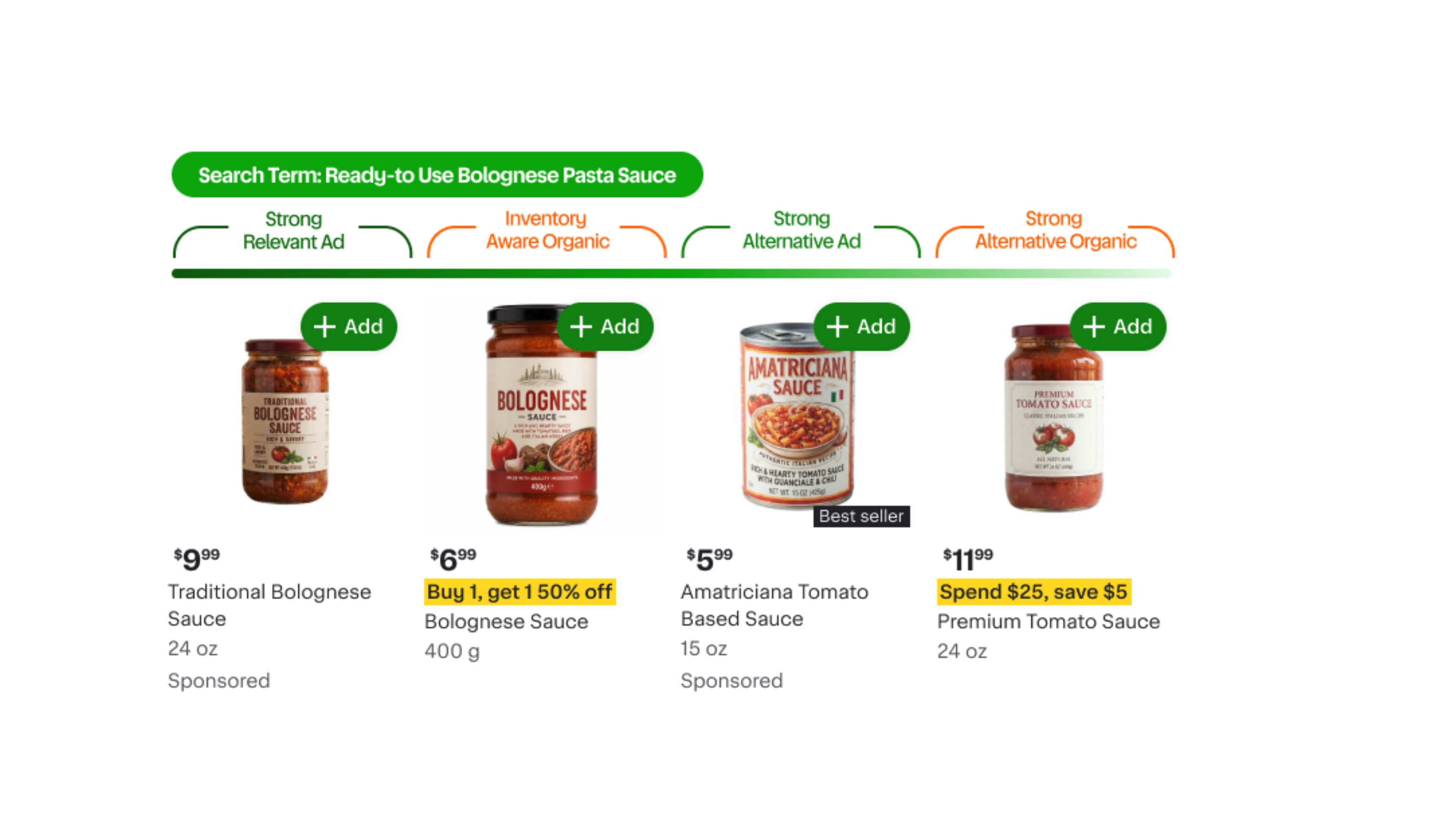
Whereas fixed ad slots follow a predetermined ordering of products, our new system makes this a dynamic real-time decision. For example, take someone searching for a ready-to-use bolognese pasta sauce. The system evaluates available sponsored and organic products to determine the best ranking to show each customer in that moment, at that time, in that place. A highly relevant sponsored product such as a bolognese sauce, may appear prominently when it is a strong match for the customer. If an organic product is a stronger match than the available sponsored options, it can appear first while less relevant sponsored products are ranked lower.
From finding products to inspiring discovery
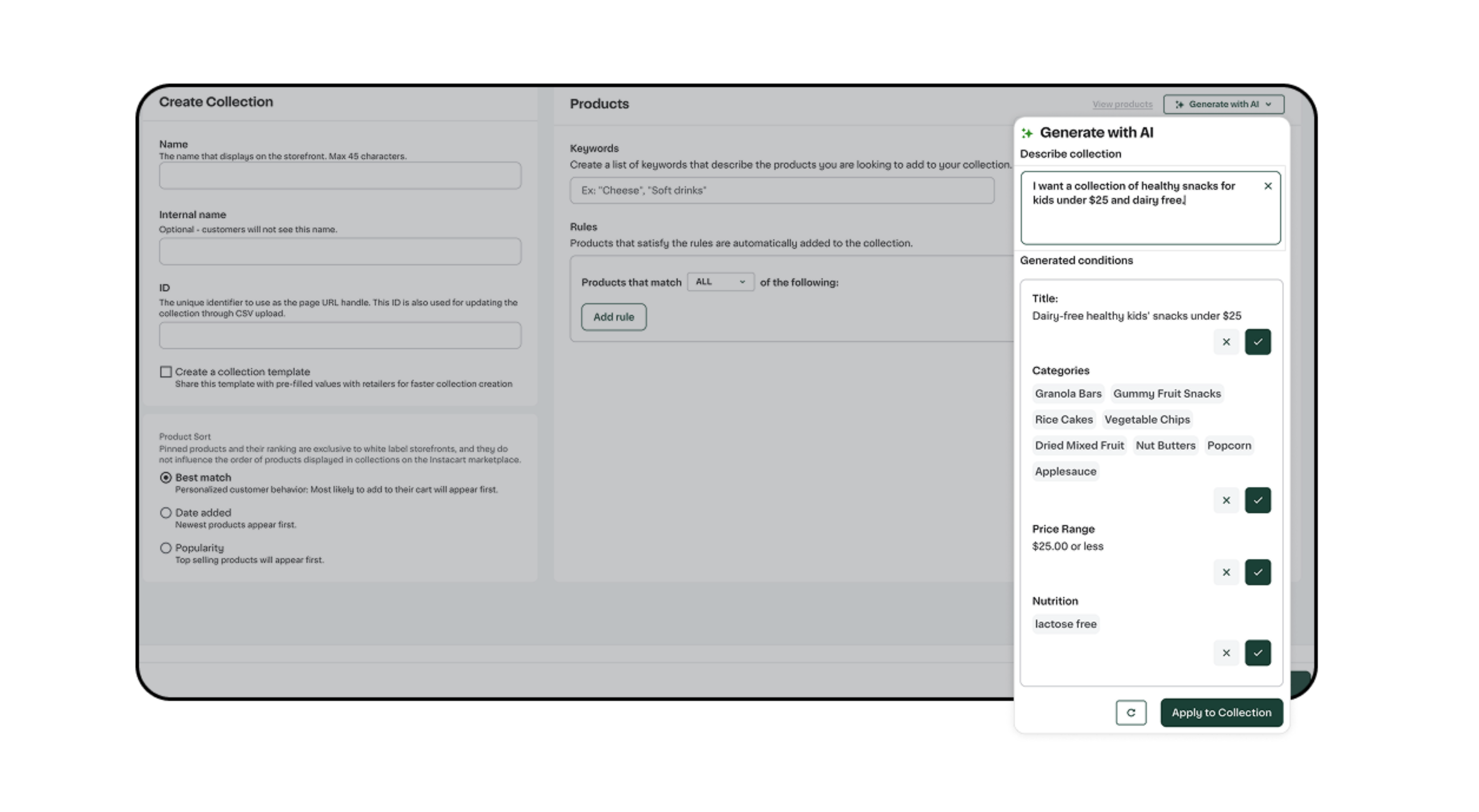
Better discovery helps customers find what they came for but the homepage is where retailers can shape what they didn't know to look for. Retailers can now use AI to easily create product collections to merchandise discovery moments; AI can turn simple ideas such as “healthy snacks for kids under $25 and dairy free” into curated shopping experiences with the underlying product rules generate automatically in seconds. Retailers can also leverage a library of seasonal and trending collections expertly curated by Instacart, helping them launch timely merchandising experiences faster without building every collection from scratch. This capability is currently available through early access, with ongoing enhancements planned.
Discovery to decision: Start anticipating customer needs
Long-term growth requires a storefront that also understands and inspires what they'll need tomorrow and surfaces it before they have to ask. As digital grocery matures, the retailers pulling ahead are those creating experiences that anticipate customer needs, reflect individual preferences, and become more valuable with each visit.
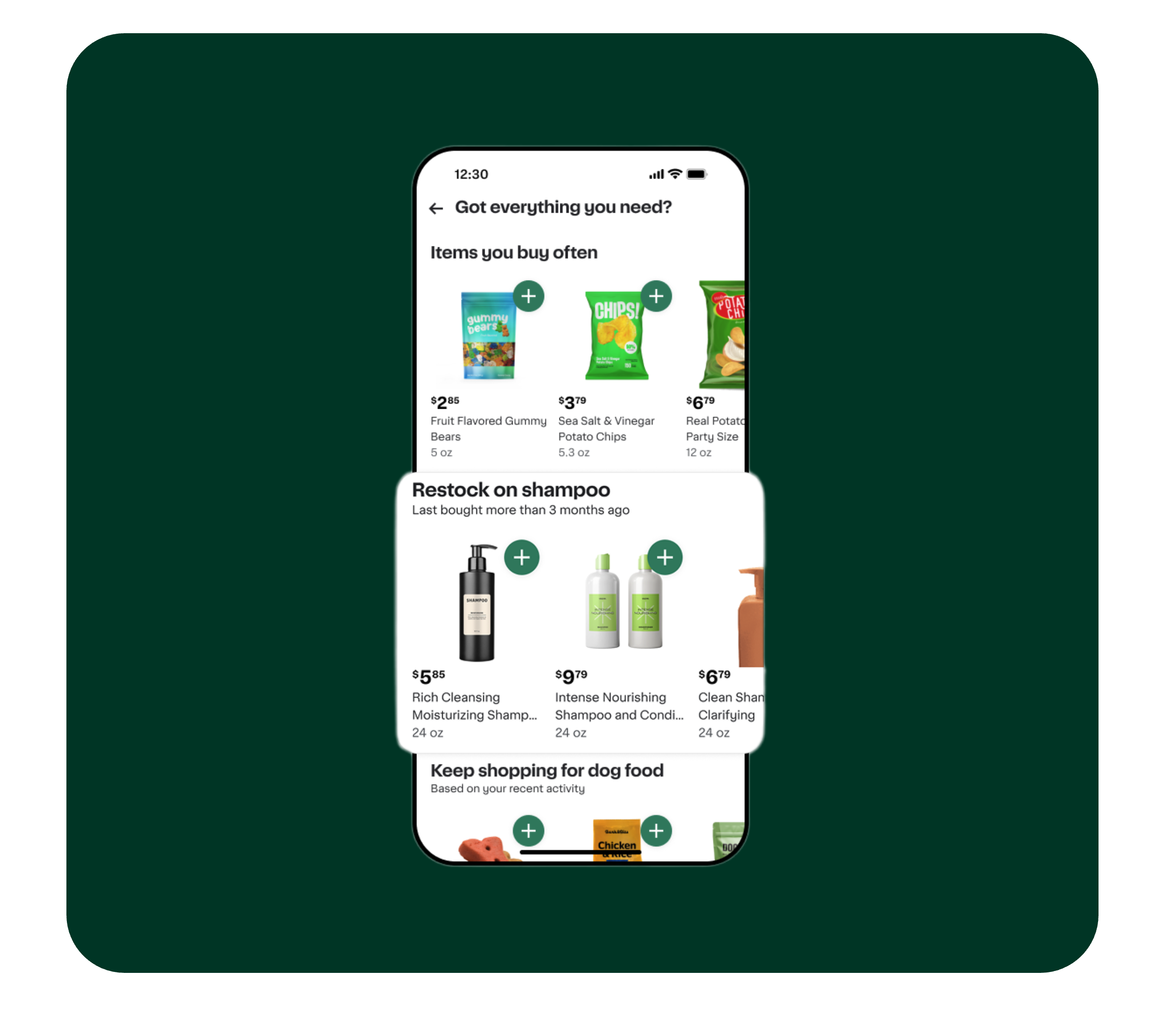
The most reliable wins start with household essentials that customers already intend to restock. Everyday essentials like laundry products, paper goods, personal care, and pet food follow predictable purchase cycles—yet they can be easy to overlook online. Proactively reminding customers to restock before they run low gives retailers a new opportunity to capture these routine purchases digitally. Restock reminders help retailers unlock this opportunity with a ML-powered carousel that surfaces products a customer regularly buys when they're predicted to be running low, based on their personal purchase history and consumption patterns. This carousel will include specific brands they've bought before, making the add-to-cart decision as easy as a single tap.
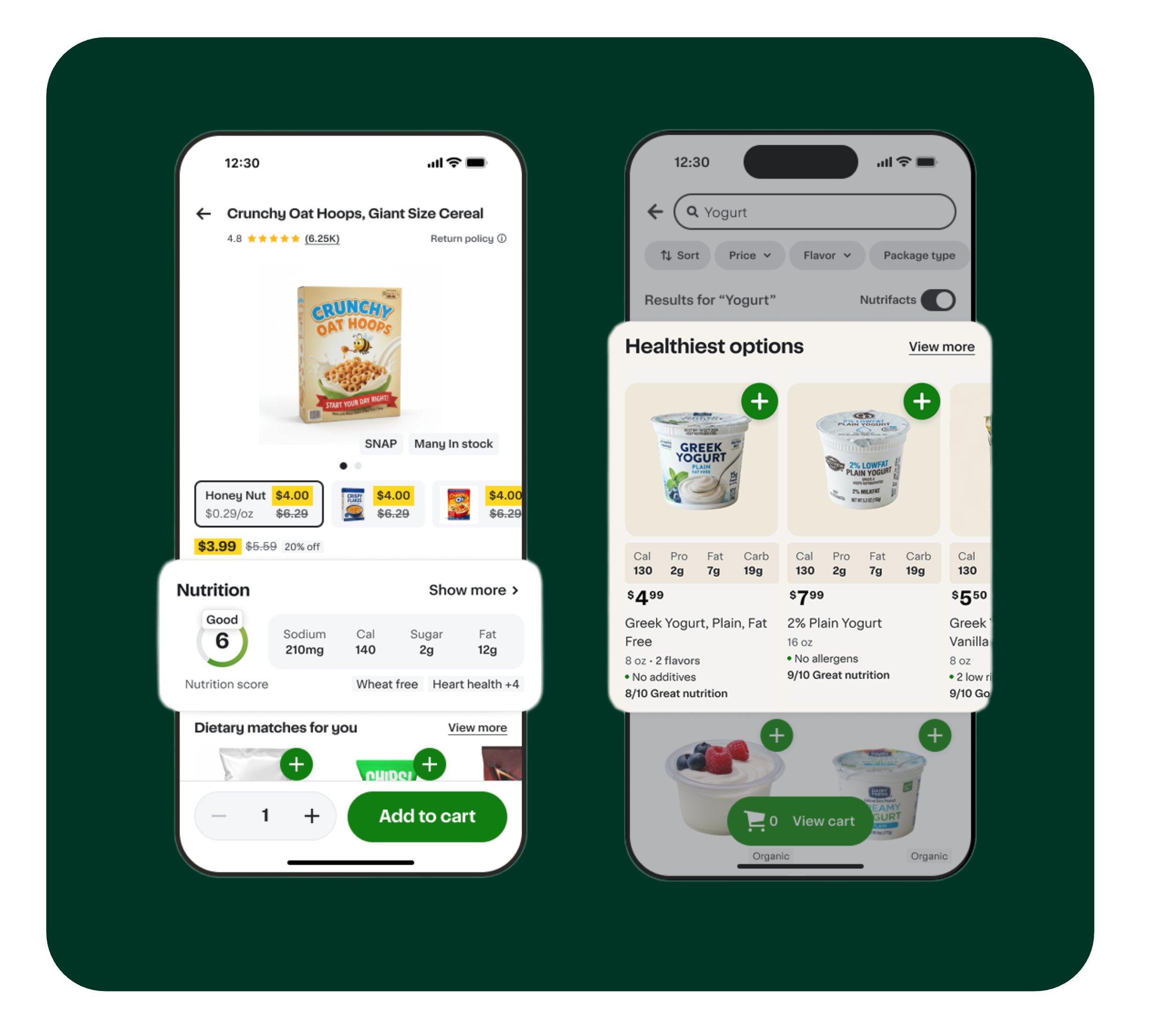
The opportunity extends beyond knowing what customers are likely to need next, it’s also about understanding what matters to them when they shop. Give health-conscious customers the nutritional insights they need to shop with confidence, making it easier to discover and find products that fit their needs. The Nutritious Choice Carousel surfaces products with a higher nutrition score (powered by Tufts, explore the details in our release notes) directly on the storefront, helping customers discover options aligned with their goals while giving retailers a meaningful way to showcase their wellness assortment at the moment decisions are made.
Turning preferences into control over every fresh choice
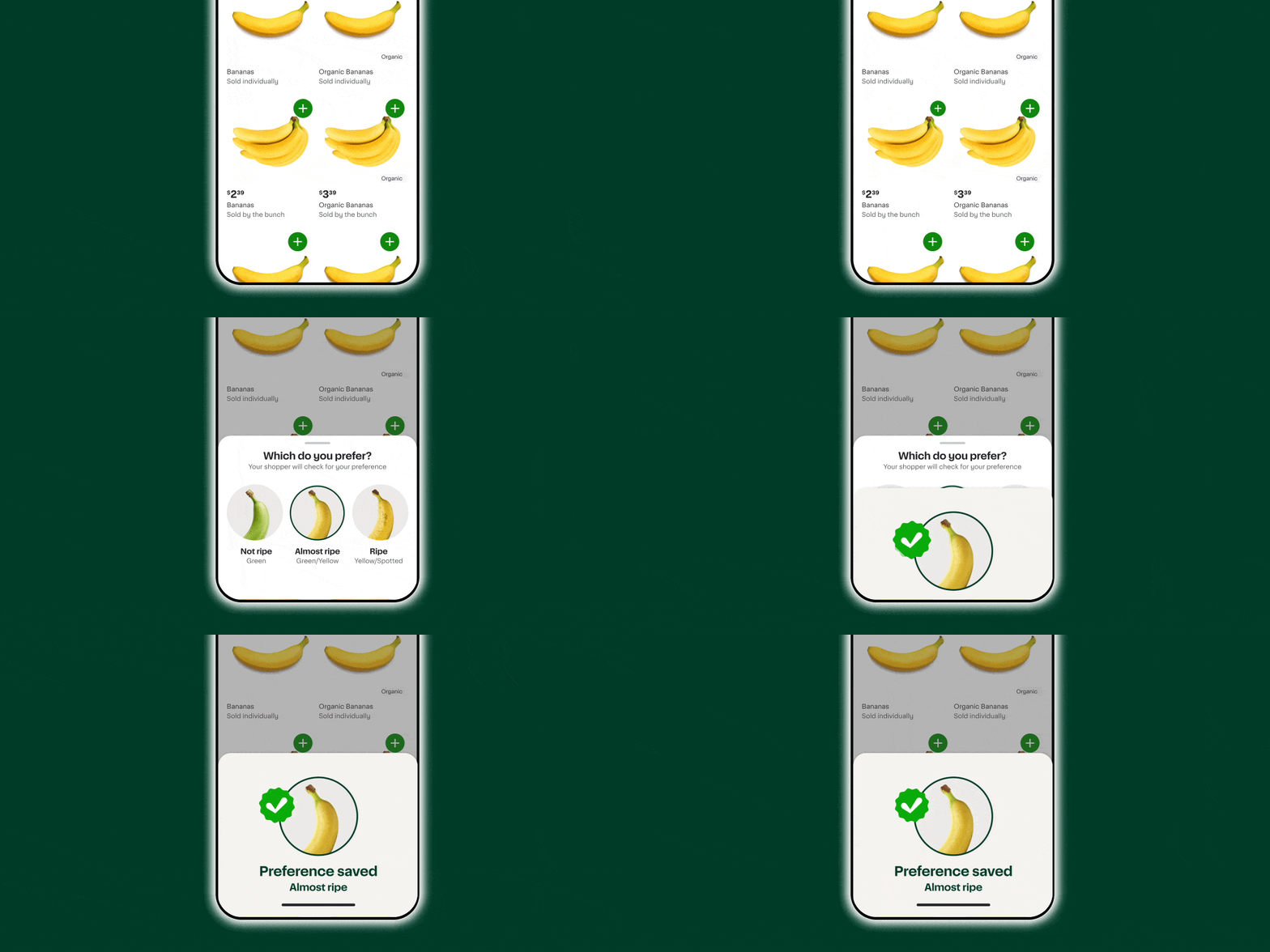
Finally, sustainable growth in fresh categories depends on control. One of the biggest barriers to ordering fresh products online is the desire for customers to choose items themselves, so they can assess quality, ripeness, and freshness firsthand. Giving customers more control over how fresh items are selected helps bridge that gap. Customers can set preferences for and types of produce and those preferences help guide item selection across future orders such as a preference for firmer avocados or ripe bananas. Over time, saved preferences help ensure customers get the types of items they want on future orders, creating a more personalized experience in categories where quality and individual preferences matter most.
Personalization compounds over time
The retailers that create the most valuable digital grocery experiences won't win by simply offering more products—they'll win by making every interaction more relevant. By creating a storefront that becomes more responsive with each visit, retailers can unlock new opportunities to grow digital engagement, capture more meaningful baskets, and build stronger customer experiences over time.
Request a Storefront Pro demo here.
1 McKinsey & Company. (2021). The value of getting personalization right — or wrong — is multiplying.