Baby carrots look simple: open the bag, grab a handful and start snacking. But the name hides an important distinction. Most of the smooth, uniform carrots sold in bags are not carrots harvested at an unusually tiny size. They are full-size carrots that have been cut, peeled and shaped into smaller pieces.
This guide covers what baby carrots are, how baby carrots are made, baby carrots nutrition and calories, how to cook and store them, and how to tell when they have gone bad.
What are baby carrots?
While there are baby carrots, also known as carrots that have been plucked from the ground before reaching their final stage in maturity, the baby carrots most people picture are the smooth, short, little carrots you find in a pre-packaged bag.
Those packaged carrots are more precisely called baby-cut carrots. They start as larger carrots and are trimmed and shaped into the snack-size pieces sold in produce departments. True baby carrots, on the other hand, are harvested while the carrot root is still young and may be sold with some of the green tops attached.
You can browse baby carrots and other carrots available from retailers in your area through Instacart.
Are baby carrots real carrots?
Yes. The bagged baby carrots most shoppers buy are real carrots. The difference is mainly in their preparation: baby-cut carrots are made from mature carrots, while true baby carrots are harvested before they reach full size.
That also means baby carrots and regular carrots are nutritionally very similar. Cutting and shaping the carrot changes its size and surface, not what vegetable it is.
How are baby carrots made?
The baby carrots that you see packaged in convenient bulk baggies are actually referred to as “baby cuts” in the industry.
So, how do they make baby carrots? Producers begin with larger carrots, sort them, cut them into shorter sections and use peeling or abrasion equipment to create the familiar rounded shape. The carrots are then washed, chilled, and packaged as fresh-cut produce.
Modern baby-cut carrots are generally credited to California farmer Mike Yurosek. In 1986, he found a new use for carrots that retailers might otherwise reject for cosmetic reasons by cutting and shaping them into smaller, more uniform pieces. The idea turned an appearance problem into a convenient snack format.
Are baby carrots processed?
Packaged baby-cut carrots are processed in the literal sense that they are washed, cut, peeled and shaped before sale. They are still fresh produce rather than a formulated food. Fresh-cut produce processors may also use antimicrobial treatments in wash water as part of food-safety controls, followed by appropriate rinsing and handling.
Where do baby carrots come from?
Baby carrots as a format didn't come from a particular place, they were the innovation of one California farmer.
The baby-cut format became popular through California's carrot industry after Yurosek's 1980s innovation. Today, the carrots in a bag can come from different growing regions depending on the brand, retailer and time of year, so check the package if you want to know the specific origin of the carrots you are buying.
Baby carrots nutrition and calories
Baby carrots are a low-calorie vegetable that provides fiber and carotenoids, including beta-carotene, which the body can convert to vitamin A. According to USDA nutrient data, 100 grams of raw baby carrots contains about 35 calories and roughly 3 grams of fiber.
Baby carrots also provide smaller amounts of several other vitamins and minerals. Exact nutrition can vary slightly by variety, serving size and data source.
Are baby carrots healthy?
Baby carrots can fit easily into a balanced eating pattern. They are low in calories, require almost no prep and can add vegetables, fiber and carotenoids to snacks or meals. What you pair them with matters too: try them with hummus, yogurt-based dips, nut or seed butter, or alongside a meal that includes protein and other produce.
When are baby carrots in season?
Although they are typically found in stores year-round, baby carrots do have peak seasons. Carrots are often harvested during their peak seasons in the late spring and fall.
The exact harvest window varies by region and growing conditions. Because packaged baby-cut carrots are supplied from multiple growing areas and carrots store well under refrigeration, shoppers can usually find them throughout the year.
How to cook baby carrots
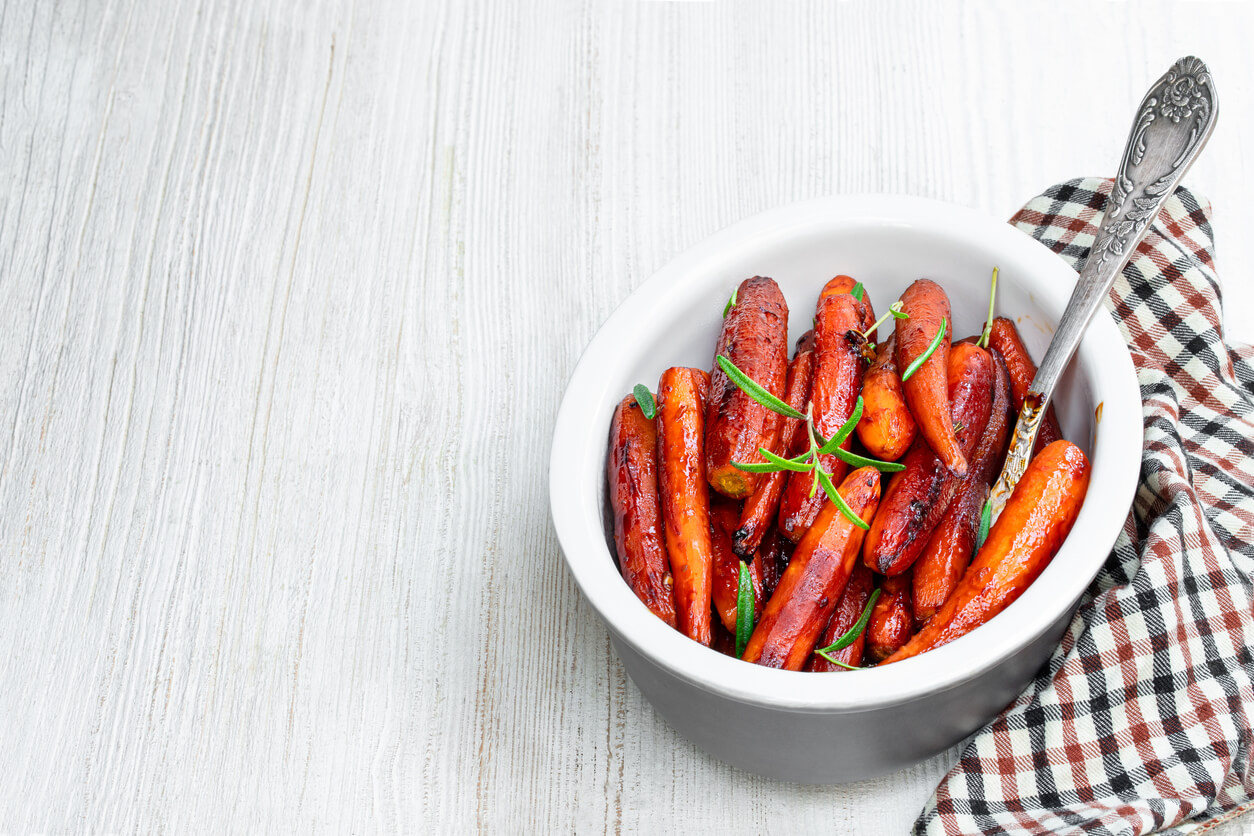
Baby carrots can go straight from the bag to a snack plate, but cooking softens their texture and brings out more sweetness. Because they are already peeled and similarly sized, they are especially easy to roast, steam, boil or sauté.
Roast baby carrots
Toss baby carrots with a small amount of oil and your preferred seasonings, spread them in a single layer, and roast until browned at the edges and tender in the center. For more even cooking, halve especially thick carrots lengthwise.
Steam or boil baby carrots
Steam baby carrots until they are tender enough to pierce with a fork but still hold their shape. You can also simmer them in water, then drain and season. Steaming generally keeps the carrots from becoming waterlogged and works well when you want a simple side dish.
Sauté baby carrots
For a faster stovetop option, cut baby carrots lengthwise or into coins so they cook more quickly. Sauté them with a little oil or butter, then add herbs, spices, citrus or a small amount of glaze toward the end of cooking.
How to store baby carrots
Keep baby carrots refrigerated in their original package until opening. After opening, reseal the bag tightly or move the carrots to a covered container so they do not lose moisture. The crisper drawer is a good place to keep them cold and protected from drying air.
A little moisture inside the package is not automatically a sign of spoilage. What matters is the condition of the carrots: they should remain firm and smell fresh, without mold or a slippery, mushy surface.
How long do baby carrots last in the fridge?
Baby carrots can often be kept for a few weeks in the refrigerator when stored properly. USDA FoodKeeper guidance lists about four weeks of refrigerated storage for baby carrots, while fresh-cut quality can vary with temperature, packaging and how long the carrots were already in distribution before purchase.
Use the package date as a quality guide, but also check the carrots themselves. A date passing does not automatically mean the food is spoiled; odor, texture and visible spoilage are more useful signals once the package is in your refrigerator.
Can you freeze baby carrots?
Yes. For better texture and quality, blanch baby carrots before freezing. Small whole carrots can be briefly blanched in boiling water, cooled quickly in ice water, dried and packed into freezer-safe containers or bags. Frozen carrots will usually be softer after thawing, so they work best in cooked dishes such as soups, stews, and casseroles.
How to tell if baby carrots are bad
When a baby carrot has developed a white cast around it, also known as a ‘blush,’ the carrot is dehydrated.
That white appearance on its own is generally a quality issue rather than a sign that the carrot is unsafe. Because baby-cut carrots have a large exposed surface area, they can dry out more readily than an intact carrot.
If your baby carrots have started to turn soft, they have started to spoil. If you notice any mold, mushy or slimy texture, or a foul odor, toss the baby carrots immediately.
How to shop for baby carrots
When shopping for baby carrots, inspect the bag to ensure none of the carrots have molded. Also, check that the carrots do not have dark spots or a soft texture. Baby carrots should be smooth in appearance, orange, and firm to the touch.
Also look for a bag that is intact and cold in the refrigerated produce section. A small amount of moisture can be normal, but avoid packages with obvious spoilage, damaged seals, or carrots that look mushy.
If you are looking to have your groceries conveniently delivered, you can easily shop for baby carrots and more via the Instacart app. Compare available sizes and brands from nearby retailers, then add baby carrots to your cart for delivery or pickup where available.