


Collard greens are hearty enough for a long braise but versatile enough for quick sautés, wraps and raw salads. If you have ever brought home a large bunch and wondered how much of the stem to keep, how thoroughly to wash the leaves, or how long to cook them, this guide walks through the process from grocery store to plate.
What are collard greens?
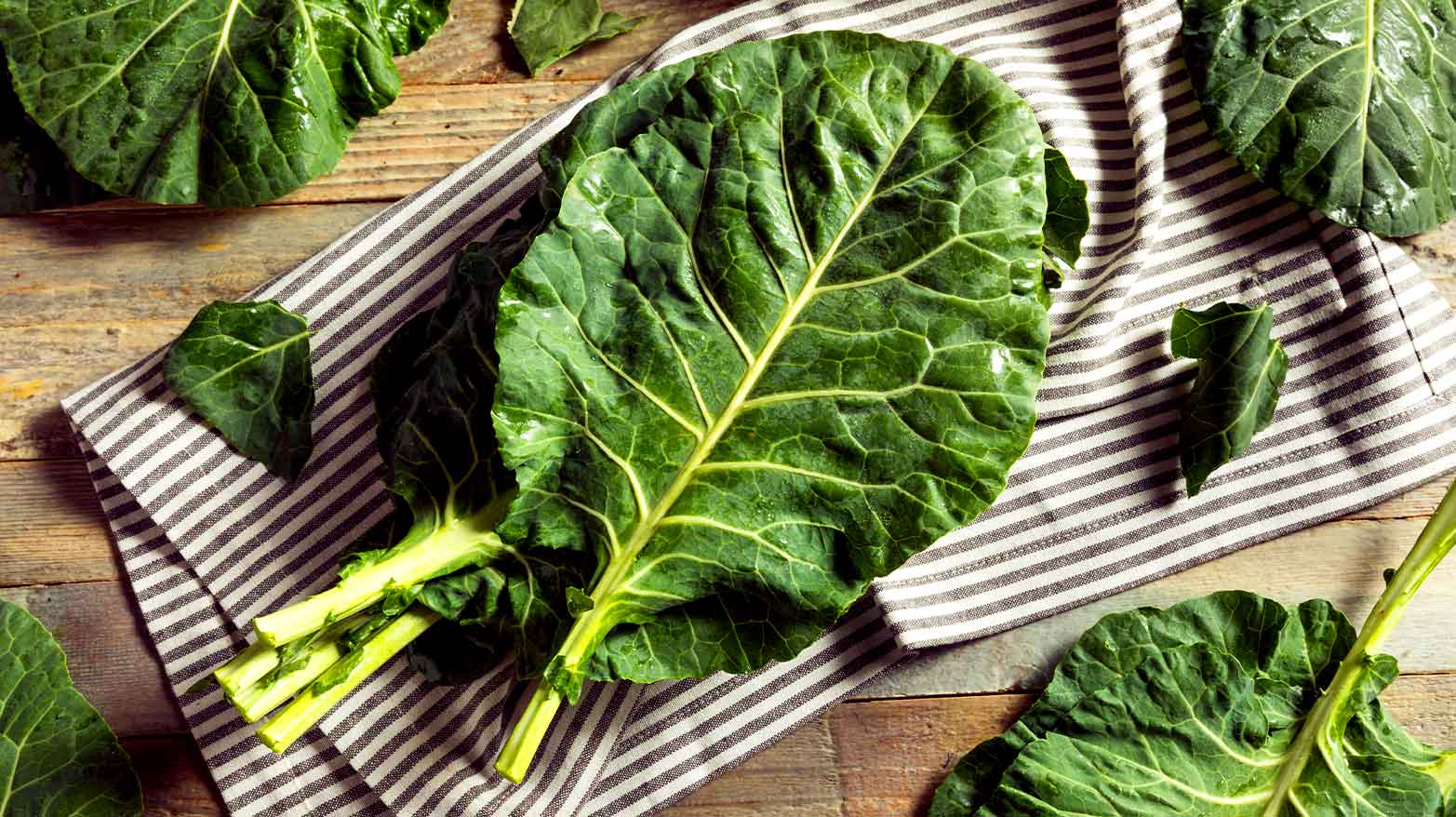
Collards are a dark green leafy vegetable. They have fan-like leaves and tough stems. They are part of the Brassica family, which also includes kale, cabbage, broccoli, and mustard greens. Their broad leaves are sturdy and hold up well to both slow cooking and high-heat sautéing.
Collard greens are strongly associated with Southern cooking in the United States, but leafy brassicas related to modern collards have been cultivated for centuries in many parts of the world.
What do collard greens taste like?
Collard greens are nutrient-dense leafy greens. They provide vitamin K, vitamin A, vitamin C, folate, fiber and minerals including calcium and manganese. Cooking changes the amount of some nutrients per cup because the leaves shrink, but both raw and cooked collards can contribute to a varied, produce-forward diet.
Collard greens nutrition
Collard greens are nutrient-dense leafy greens. They provide vitamin K, vitamin A, vitamin C, folate, fiber and minerals including calcium and manganese. Cooking changes the amount of some nutrients per cup because the leaves shrink, but both raw and cooked collards can contribute to a varied, produce-forward diet.
How to clean collard greens
Collard leaves can hold grit in their folds, so cleaning them thoroughly is worth the extra minute. Separate the leaves from the bunch and inspect them before you start.
How to wash collard greens
- Fill a clean sink or large bowl with cool water.
- Submerge the leaves and swish them around to loosen dirt and grit.
- Lift the greens out of the water instead of pouring the water over them; grit tends to settle at the bottom.
- Repeat with fresh water until no grit remains.
- Dry the leaves well if you plan to sauté them or store them after washing.
How to cut collard greens
For tender pieces, fold each leaf in half along the stem and slice away the thick center rib. Stack several leaves, roll them into a loose cylinder and slice crosswise into ribbons. For braises, wider ribbons work well; for quick sautés or raw salads, cut the leaves more thinly.
Can you eat collard green stems?
Yes, collard green stems are edible, but the thick center ribs can be tough. Slice tender stems thinly and start cooking them a few minutes before the leaves. If the stems are very large or fibrous, remove them and save them for soups, stocks or a longer braise.
How to cook collard greens
There is no single best way to cook collard greens. Traditional braising produces very tender greens, while sautéing keeps more texture and is much faster.
- Braise or simmer: cook sliced greens with broth or water, aromatics and seasonings until tender.
- Sauté: cook thinly sliced greens in a wide skillet with oil, garlic, onion or chile.
- Steam: steam until tender, then dress with olive oil, lemon, vinegar or your favorite seasoning.
How long to cook collard greens
Cooking time depends on how the greens are cut and the texture you want. Thinly sliced collards can become tender in roughly 8 to 15 minutes in a covered sauté, while a traditional braise may take 30 to 60 minutes or longer. The most reliable test is texture: the leaves should be tender enough to bite through easily without turning mushy.
Can you eat collard greens raw?
Yes. Raw collard greens are safe to eat when properly washed, but their leaves are thicker and chewier than many salad greens. Remove the center ribs, slice the leaves very thinly and massage them with dressing or oil to soften the texture. Young, smaller leaves are usually more tender.
Collard greens vs. kale
Collard greens and kale are close relatives, but they behave differently in the kitchen. Collard leaves are generally broader, flatter and more uniform, while kale often has curled or textured leaves. Collards tend to be sturdy and slightly more cabbage-like in flavor; kale can range from peppery to earthy depending on the variety.
They can substitute for each other in many cooked recipes, but collards may need a little more time to become tender.
When are collard greens in season?
Collard greens are cool-weather vegetables and are especially associated with fall, winter and early spring. They are often available year-round, but cooler temperatures can produce sweeter, less bitter leaves.
How to pick collard greens
Choose bunches with firm, crisp leaves and sturdy stems. The leaves should look richly green rather than dull or limp.
Browning or yellowness should be avoided. Small insect holes are usually cosmetic, but skip leaves with widespread damage, slime or signs of decay.
How to store collard greens
Don't wash collard greens before storing them, extra moisture speeds up spoilage. Extra moisture speeds up spoilage, so keep the leaves dry until you are ready to use them. Wrap the bunch loosely in a paper towel and place it in a produce bag or container in the refrigerator crisper drawer.
How long do collard greens last in the fridge?
Fresh collard greens are best used within about 5 to 7 days. Check them sooner if they were already damp or wilted when purchased.
Can you freeze collard greens?
Yes. For the best color and texture, blanch washed and cut collard greens briefly in boiling water, cool them immediately in ice water, drain well and freeze in airtight bags or containers.
They will keep for 10 to 12 months in this state. Quality is best when they are tightly sealed with as much excess air removed as possible.
How to tell if collard greens are bad
If you notice an odd smell or see mold forming on your collards, it is best to discard them. Also look for slimy leaves, widespread yellowing or a soft, collapsing texture.
What is a good collard greens substitute?
A collard greens substitute should be sturdy enough to stand up to the cooking method you are using.
- Kale: the closest all-purpose substitute for braises, sautés and soups.
- Mustard greens: a good choice if you like a sharper, pepperier flavor.
- Swiss chard: tenderer than collards but useful in sautés, soups and braises.
- Turnip greens: another Southern-style option with a more pronounced bite.
- Spinach: best for faster-cooking recipes because it wilts much more quickly.
Shop collard greens with Instacart
Collard greens can go from sturdy, slightly bitter leaves to tender, flavorful greens with the right preparation. Look for crisp, deeply colored leaves, wash them thoroughly, and choose a cooking method based on whether you want a quick sauté or a softer, slow-cooked texture.
When you are ready to cook a batch, browse collard greens on Instacart to see what participating retailers have available for delivery or pickup in your area.


