Fennel has one of those produce-aisle looks that can make you wonder where to start: a pale bulb, long green stalks and a cloud of feathery fronds. The good news is that nearly every part is useful. Once you know how to cut fennel and how its flavor changes when cooked, it becomes an easy way to add crunch, sweetness and a light touch to salads, pastas, roasts and more.
What is a fennel bulb?
A fennel bulb is the crisp, pale base of Florence fennel, a Mediterranean plant in the carrot family. Despite its bulb-like appearance, it is not a root vegetable; the edible bulb forms above ground from thickened leaf bases. The white bulbs can be eaten raw or cooked, depending on the dish and your preferences.
Fennel is sold with three usable parts: the bulb, the stalks and the fronds. The bulb is the most common part for slicing and cooking, while the stalks can flavor broths or slow-cooked dishes and the fronds work like a fresh herb.
What does fennel taste like?
Raw fennel tastes crisp, lightly sweet and fresh, with a noticeable anise or licorice-like flavor. Cooking softens that anise note and brings out more sweetness, which is why people who find raw fennel too assertive may still enjoy it roasted, braised or sautéed.
Fresh fennel bulbs will also emit a subtle fragrance reminiscent of anise or licorice. That aroma should smell clean and fresh rather than sour or musty.
Fennel vs. anise: what's the difference?
Fennel and anise share a similar licorice-like flavor because both contain aromatic compounds that read as sweet and anise-like on the palate, but they are different plants. Fennel is eaten as a vegetable and herb: the bulb, stalks, fronds and seeds can all be used. Anise is grown primarily for its small seeds, which are used as a spice.
If a recipe calls for fennel bulb, anise seed is not a one-to-one substitute because it cannot replace the bulb's crisp texture. It can, however, help recreate some of fennel's signature flavor.
What part of fennel do you eat?
You can eat the bulb, stalks and fronds. The bulb is tender enough to eat raw or cooked, the stalks are firmer and best chopped finely or cooked until tender, and the fronds have a delicate herb-like texture.
Can you eat fennel raw?
Yes. Thinly sliced or shaved fennel is especially good raw because it stays crisp and refreshing. Add it to salads, slaws, sandwiches or grain bowls, and pair it with citrus, apples, Parmesan, olive oil, or a bright vinaigrette.
How to use fennel fronds
Use fennel fronds the way you would use a soft fresh herb. Chop them over fish, pasta, roasted vegetables, soups or salads, blend them into pesto or salsa verde, or reserve a few whole fronds for garnish. Add them near the end of cooking so their flavor stays fresh.
How to cut fennel
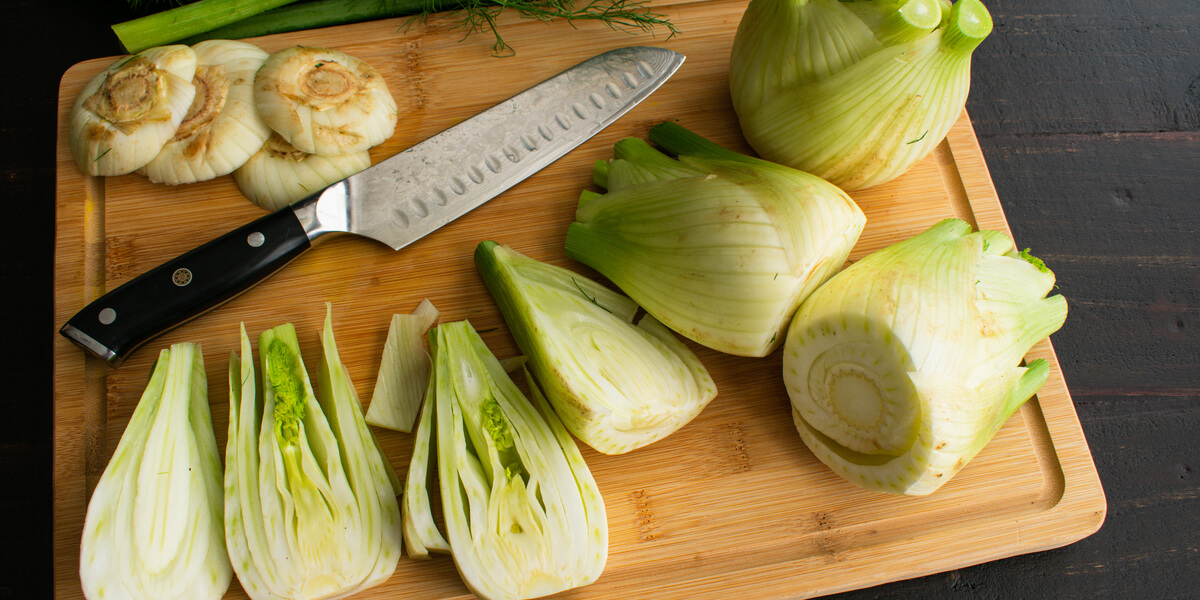
Learning how to cut fennel is mostly about removing the tough base and separating the bulb from the stalks. From there, you can slice, chop or shave it depending on how you plan to use it.
- Trim off the stalks where they meet the bulb. Save the fronds and any tender stalk pieces for another use.
- Slice a thin piece from the bottom of the bulb to remove the dry root end.
- Remove any bruised, browned or especially tough outer layer.
- Cut the bulb in half from top to bottom.
- For thin slices, place each half cut-side down and slice crosswise. For wedges, cut through the core so each wedge stays together. For finely chopped fennel, slice first, then cut the slices into smaller pieces.
- For salads or slaws, shave the bulb very thinly with a sharp knife or mandoline.
How to cook fennel
Fennel becomes softer, sweeter and less licorice-forward as it cooks. That makes it easy to work into savory dishes even if you do not love the stronger flavor of raw fennel.
Roast fennel
Cut the bulb into wedges or thick slices, toss with oil and seasonings, then roast until the edges brown and the center is tender. Roasting is one of the easiest ways to bring out fennel's natural sweetness.
Sauté or braise fennel
Thin slices cook quickly in a skillet with olive oil or butter. For a softer texture, add a splash of broth, wine or water and let the fennel braise gently until tender. Sautéed or braised fennel works well with chicken, fish, beans, pasta and grains.
Grill fennel
Keep the core attached when cutting wedges for the grill so the pieces hold together. Grill until lightly charred and tender, then finish with lemon, herbs or a salty cheese.
What is the nutritional value of fennel?
Fennel is naturally low in calories and provides fiber along with vitamin C, potassium and smaller amounts of several other vitamins and minerals. Because serving sizes vary, think of fennel as one part of a varied produce intake rather than a single source for any one nutrient.
When is fennel in season?
Fennel bulbs are usually in season from fall to winter, although home-grown varieties may appear in the early summer or spring. Grocery availability can extend beyond peak season, but cooler-weather fennel is often especially crisp and aromatic.
How to pick fennel
When buying fennel bulbs, choose small- to medium-sized veggies that are firm to the touch. Look for a tight, pale bulb with minimal browning, crisp stalks and fresh green fronds. A little surface scuffing is fine, but avoid bulbs that feel soft, wet, split or shriveled.
How to store fennel
For the best texture, store fennel unwashed in the refrigerator. Trim off the stalks if the bunch is too tall for your crisper drawer, then keep the bulb loosely wrapped or in a produce bag so it does not dry out. Store the stalks and fronds separately, lightly wrapped, and use the fronds sooner because they wilt faster.
A fresh fennel bulb is best used within about a week. If it starts to soften slightly, it can still work well in cooked dishes.
Can you freeze fennel?
Yes. Slice or chop the bulb before freezing. Blanching first can help preserve color and texture, while raw frozen fennel is best reserved for soups, sauces and other cooked dishes where crispness is not essential. Fennel fronds can also be chopped and frozen for later use.
How to tell if fennel is bad
Discard fennel if the bulb is slimy, very soft, heavily browned, or gives off a sour or unpleasant odor. Wilted fronds alone do not necessarily mean the bulb is spoiled, so check the bulb itself before throwing the whole bunch away.
What can I substitute for fennel?
The best fennel substitute depends on whether you are trying to replace its crunchy texture, its mild sweetness or its anise-like flavor.
- Celery: a good fennel bulb substitute when crunch matters most, especially in salads and slaws.
- Leek: a useful swap in soups, braises and other cooked dishes where you want a mild, sweet allium flavor.
- Bok choy stems: crisp and sturdy enough for stir-fries and sautéed dishes.
- Onion: works well when the recipe needs sweetness and structure but not fennel's licorice-like flavor.
- Celery plus a small amount of fennel seed or anise seed: useful when you want both texture and some of fennel's signature aroma.
Shop fennel bulbs with Instacart
Now that you know how to pick, prepare, cook, and store fennel, you can put the whole vegetable to use — from the crisp bulb to the delicate fronds. Choose firm bulbs with fresh-looking stalks and fronds, then decide whether you want to slice them raw, roast them until sweet, or save them for another meal.
When you are ready to try it, browse fennel bulbs on Instacart to see what participating retailers have available for delivery or pickup in your area.