Dinner hits the table in 10 minutes, but the mashed potatoes look more like soup than a side. Runny mash is easy to fix without having to start over, even with guests at the table.
Runny mash usually comes from waxy potatoes, overcooking, skipping the drain-and-dry step, or adding too much liquid at once. Here’s how to thicken mashed potatoes and save your side dish with one of the seven methods below. If you’re missing an ingredient, you can order it through Instacart from stores near you.
1. Simmer on the stovetop
Best for fixing: Slightly loose mash, no extra ingredients
Time: 5–10 minutes
Flavor impact: Minimal
Simmer the potatoes to cook off extra water without adding any ingredients. Return the potatoes to the pot, set the burner to low, and cook with the lid off. Stir every minute or so, scraping the bottom, until the steam slows and the mash holds its shape. Stir gently, as overworking can make the mashed potatoes gummy. This same trick also works if you need to thicken sauces.
2. Dry the mash in the oven or microwave
Best for drying out: Slightly runny mash when your stovetop is full
Time: 2–5 minutes in the microwave; 10–15 minutes in the oven
Flavor impact: Minimal
If you need to thicken mashed potatoes that have too much milk, dry them to remove excess moisture. If you’re using a microwave, heat them uncovered on high for 1 minute in a microwave safe bowl, then stir and check the thickness. If you’re using an oven, use a shallow baking dish and bake uncovered at 350°F, stirring halfway through. Repeat in short bursts, stopping as soon as the mash holds its shape.
3. Stir in instant potato flakes
Best for rescuing: Very runny mash in a hurry
Time: 1–3 minutes
Flavor impact: Minimal
Instant potato flakes absorb liquid quickly and blend right in. To thicken up a batch of mashed potatoes that serves 4–6, stir in 1 tablespoon, then wait about 1 minute before adding more. Repeat until your mash is as thick as you want.
4. Add a cornstarch slurry
Best for saving: Very runny mash when you’re out of potato flakes
Time: 2–3 minutes
Flavor impact: Minimal
A cornstarch slurry is an easy way to thicken mashed potatoes without flour. Mix ½ teaspoon of cornstarch with 1 teaspoon of cold water to form a smooth slurry. Warm the potatoes in a saucepan over low heat, then stir in the slurry.
Keep stirring over low heat for a minute or two, since cornstarch needs heat to thicken. Add more slurry as needed.
You can thicken mashed potatoes with flour, too, but you’ll need to cook the potatoes for longer to remove the raw taste, and there’s a risk of making the mash gummy.
Grab it now on Instacart


5. Fold in more potatoes
Best for stretching: Very runny mash when you have time to spare
Time: 20–25 minutes
Flavor impact: None
Adding more potatoes will make mashed potatoes thicker and leave extra for your guests. Peel and cube 1–2 medium potatoes of the same type you started with, or russet potatoes, which absorb the most liquid. Boil them until tender, then mash them without adding liquid. Gently fold the two batches together in a saucepan over low heat.
6. Mix in cheese
Best for firming up: Slightly runny mash that could use more richness
Time: 1–2 minutes
Flavor impact: Noticeable
Use low-moisture cheese like Parmesan, sharp white cheddar, or Gruyère, which add body without much liquid. Start with ¼ cup of freshly grated cheese and stir it in while the potatoes are hot so it melts evenly. Add more until you get the texture you want.
Cheese adds salt, so make sure to taste before you add more seasoning.
7. Stir in sour cream, Greek yogurt, or cream cheese
Best for thickening: Slightly runny mash that needs a tangy finish
Time: 1–2 minutes
Flavor impact: Noticeable
A few tablespoons of sour cream or Greek yogurt can firm up runny mash because both are much thicker than milk. Cream cheese is another easy sour cream substitute that adds a tangy flavor. Let the dairy come to room temperature first, but don’t heat it on the stove, since it can curdle.
Why your mashed potatoes turned out runny
Mashed potatoes turn runny when there’s more liquid than the potatoes’ starch can absorb. That usually happens because of 1 of 4 reasons:
Waxy potatoes: Red potatoes, fingerling potatoes, and new potatoes are low in starch, so they absorb the least liquid. High-starch russets soak up milk and butter quickly, while Yukon Gold potatoes fall in the middle.
Overcooked potatoes: Long boiling times and small pieces let potatoes soak up extra water.
Not draining or drying well: Leftover water thins the mash when you add dairy.
Too much liquid at once: Adding all the milk and butter will quickly thin the mash.
How to prevent runny mashed potatoes
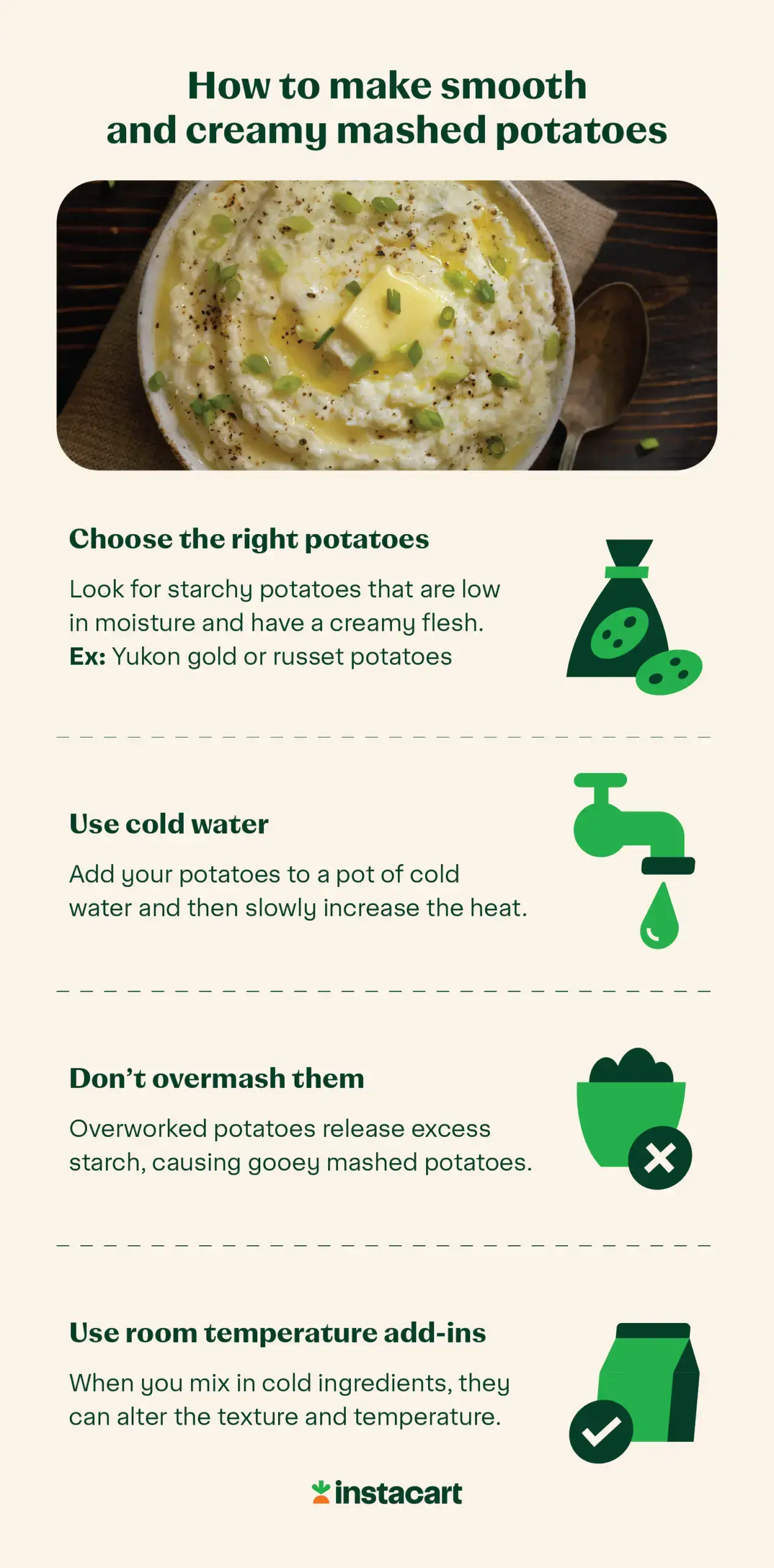
Most runny batches of mashed potatoes go wrong before you use the masher. These 5 steps keep excess moisture out from the start.
Select the right potato, like starchy russets or all-purpose Yukon Golds.
Cut uniformly and cook in cold, lightly salted water.
Drain thoroughly, then return the potatoes to the pot for a minute to steam-dry.
Warm the milk or cream (or milk substitutes) and add incrementally.
Use a masher or ricer instead of a blender, which can turn potatoes gluey.
How to fix other common mashed potato problems
If you know how to fix runny mashed potatoes, you already have the tools for these problems, too: a ricer and a few extra potatoes.
Lumpy mashed potatoes
Lumpy mash usually comes from undercooked or unevenly cut potatoes. If the lumps are firm, return the mash to the pot with a splash of milk and simmer until tender. Mash the potatoes again or press through a ricer. Add a splash of warm milk if the mash stiffens. For your next batch, cut the potatoes into even pieces, then cook until a fork slides in easily.
Gluey or gummy mashed potatoes
Overworking the potatoes with a blender or mixer can make them gummy. Fold in a batch of fresh potatoes to even out the texture. Use starchy potatoes and avoid overcooking.
Oversalted mashed potatoes
Salt adds up from the cooking water, butter, and cheese. Dilute it with ingredients like extra potatoes or unsalted dairy to balance the flavor. To avoid oversalting future batches, save the seasoning for the end.
How to thicken mashed potatoes FAQ
Can you thicken mashed potatoes without changing the flavor?
Yes. Extra potatoes add body while maintaining the taste, and a cornstarch slurry is hardly noticeable.
How do you thicken instant mashed potatoes?
Stir in more potato flakes, 1 tablespoon at a time. Let them rest for 1 minute, since the flakes continue to absorb liquid. If they’re still loose, simmer them over low heat, stirring often.
Can you thicken mashed potatoes made with cauliflower?
Yes. Cauliflower holds more water than potatoes, so the mash often turns out loose. Most fixes for regular mash work here, too. Simmer the mash uncovered, stir in cheese, or add a cornstarch slurry.
Will mashed potatoes thicken as they cool?
Yes, a little. As they cool, the starch firms up and some moisture evaporates. Leave a slightly loose batch uncovered for 5–10 minutes. For very runny mash, use one of the 7 methods above.
How do you fix consistency in mashed potatoes?
To fix the consistency of mashed potatoes, start by heating them gently on the stove to allow excess moisture to evaporate. You can also add thickening agents like instant potato flakes or cornstarch gradually until you reach the desired texture. If they’re too thick, a splash of milk or cream can help loosen them up.
Will sour cream thicken mashed potatoes?
Yes, sour cream can help thicken mashed potatoes while adding a rich, tangy flavor. When mixed in, it contributes both creaminess and thickness, making it a great option for achieving the perfect consistency. Just be mindful of the amount; start with a few tablespoons and adjust to taste.
Why do my mashed potatoes taste watery?
Watery mashed potatoes often result from using too much liquid during preparation or overcooking the potatoes, which causes them to lose their starch. To prevent this, it’s best to add liquids gradually and stop once the desired consistency is reached.
Why are my mashed potatoes gummy?
Gummy mashed potatoes result from overworking or mashing the potatoes too vigorously. Using a hand masher gently and avoiding electric mixers helps prevent this. Also, using starchy potatoes and not overcooking them can keep the texture light and fluffy.
Through thick and thin: get your potatoes delivered
Now that you know how to thicken mashed potatoes, a runny batch of mash doesn’t have to hold up dinner. Most fixes take just a few minutes with what’s already in your kitchen.
If you’re short on cornstarch, russet potatoes, or anything else on your list, you can order delivery through Instacart from stores near you.
Need more food ideas? Check out these potato recipes and comfort food dinner recipes to soothe your soul. Looking to spice up your holiday dinner? Try these non-traditional Thanksgiving dinner ideas. If you’d rather skip the cooking altogether, try holiday meal delivery.

Course:
Recipes
Cuisine:
American
Difficulty:
Easy
How to thicken mashed potatoes
Simmering, drying, adding potato flakes or cornstarch, adding dairy or cheese, or folding in more potatoes are easy ways to thicken mashed potatoes.
Ingredients
Directions
Check how runny your mashed potatoes are.
For slightly loose mash, simmer on the stovetop or dry it in the oven or microwave.
For very runny mash, stir in instant potato flakes, add a cornstarch slurry, or toss in fresh mashed potatoes.
For a richer finish, stir in cheese or full-fat dairy. Add thickeners gradually until the mash is as thick as you want.