Sauce can make or break a dish, and when it comes out thin and watery, it can disrupt the flavor, moisture and even texture of your favorite foods.
The good ol' spoon trick can determine if your sauce is too thick or thin. All you have to do is dip the back of a spoon into the sauce; if it’s smooth and velvety, then your sauce is cooked to perfection.
But what if your sauce isn’t the right consistency?
Stick around and learn how to thicken any sauce. With seven different sauce thickening techniques to choose from, there’s still time to save dinner.
1. Reduction
One of the simplest ways to thicken a sauce is to let excess liquid evaporate through reduction. Simmer or boil the sauce uncovered so the water cooks off. This process concentrates the sauce’s flavors while creating a thicker, more intense consistency.
This method works especially well when you want to thicken a sauce without adding another ingredient.
Use this method to thicken: Pasta sauce, spaghetti sauce, marinara sauce, curry sauce, cranberry sauce, tomato sauce, barbecue sauce, teriyaki sauce, caramel sauce and fruit sauce
Steps to reduce sauce:
Let your sauce boil for two to three minutes.
Check the thickness and taste at regular intervals.
Coat the back of a spoon with sauce to test the thickness.
Season your sauce after achieving the desired thickness.
2. Flour
There are two ways you can use flour to thicken a sauce: by making a slurry and by making a roux. A roux combines equal parts flour and fat, like butter. A slurry combines flour with water.
Use the roux to build a smooth, rich base. Or opt for a slurry if you want a thickening agent that you can add directly to a simmering sauce to quickly adjust its consistency.
Use this method to thicken: Cheese sauce, Alfredo sauce, cream sauce, gravy, béchamel and savory pan sauce
Steps to create a roux:
Warm butter over medium heat.
Add an equal amount of flour and butter to the saucepan.
Whisk the mixture until you create a thick, golden paste.
Add the roux to your sauce and mix until well combined.
Steps to create a slurry:
Add 2 tablespoons of flour for every 1/4 cup of cold water.
Whisk until the slurry is smooth.
Add the slurry mixture to your sauce and heat on medium.
Stir until the sauce reaches your desired thickness.
3. Cornstarch
Cornstarch is a great gluten-free alternative to thicken sauce. This thickening agent is easily available and fairly inexpensive.
It works quickly, though, so start with a small amount and add more as needed to avoid making your sauce too thick.
Use this method to thicken: Teriyaki sauce, stir-fry sauce, sweet-and-sour sauce, gravy, glaze and fruit sauce
4. Egg yolks
Egg yolks can thicken sauces while adding richness and a silky texture. Start with one or two yolks for a small batch, adding more if you want a thicker consistency.
To prevent the yolks from curdling, whisk them with a small amount of the hot sauce before adding them to your sauce.
Use this method to thicken: Alfredo sauce, cream sauce, custard sauce, hollandaise and béarnaise
Steps to thicken sauce with egg yolks:
In a bowl, separate the egg yolks from the whites.
Add a small amount of hot sauce to the bowl and whisk to keep the egg yolks from curdling.
Gradually whisk the egg mixture into the saucepan.
Cook over low heat, stirring constantly, until the sauce thickens. Avoid bringing it to a boil, which can cause the yolks to curdle.
5. Tomato paste
Tomato paste can thicken tomato-based sauces while adding concentrated flavor and body. Add it to the pan when you start cooking and sauté it briefly to caramelize its natural sugars and bring out a richer flavor.
Use this method to thicken: Tomato sauce, spaghetti sauce, marinara sauce, pasta sauce, barbecue sauce and chili
Steps to thicken sauce with tomato paste:
Pour a can of tomato paste into your saucepan.
Mix the sauce until the tomato paste is well combined.
Cook your sauce on medium heat.
6. Beurre manié
Beurre manié is a simple mixture consisting of softened butter and flour. It’s a lot like a roux, but you combine the ingredients off the heat before whisking the mixture into your sauce.
It’s especially useful for thickening a sauce when it’s nearly done cooking without adding another pan to the stovetop.
Use this method to thicken: Gravy, curry sauce, cream sauce, pan sauce, stew and wine-based sauce
Steps to thicken sauce with beurre manié:
Combine equal parts of softened butter and flour in a bowl.
Knead the butter until the texture is similar to modeling clay.
Add your beurre manié to your sauce.
Whisk the sauce on medium heat until well combined.
Continue cooking your sauce until it’s done.
7. Arrowroot
Arrowroot is a gluten-free thickening agent derived from the tropical arrowroot plant. It’s similar to cornstarch, so you can use it as a cornstarch replacement. Just avoid adding it to any dairy-based sauces, as that would create a slimy consistency.
Use this method to thicken: Teriyaki sauce, curry sauce, cranberry sauce, fruit sauce, glaze and pan sauce
Steps to thicken sauce with arrowroot:
In a bowl, add 1 tablespoon of arrowroot to 1 tablespoon of cold water.
Whisk the arrowroot and water together to create a slurry.
Add the slurry to your sauce and put on medium heat.
Boil the sauce for one minute.
The tools you need to thicken a sauce
There’s a good chance that everything you need to thicken up a sauce is already sitting in your kitchen cupboard. Here are a few quick things to grab to save your sauce:
Bowl: Make sure the bowl is large enough to avoid any spillage.
Whisk: This cooking utensil is perfect for blending together your food-thickening agents and your sauce.
Saucepan: Choose a saucepan that’s large enough to cook your sauce without spillage.
Thickening agent: You’ll need butter, flour, cornstarch or whichever other thickening agent you choose to use.
Common problems with thickening sauce
Thickening a sauce may seem simple, but it often comes with challenges that affect texture, flavor or consistency. Here’s how to identify and fix a few common sauce-thickening problems.
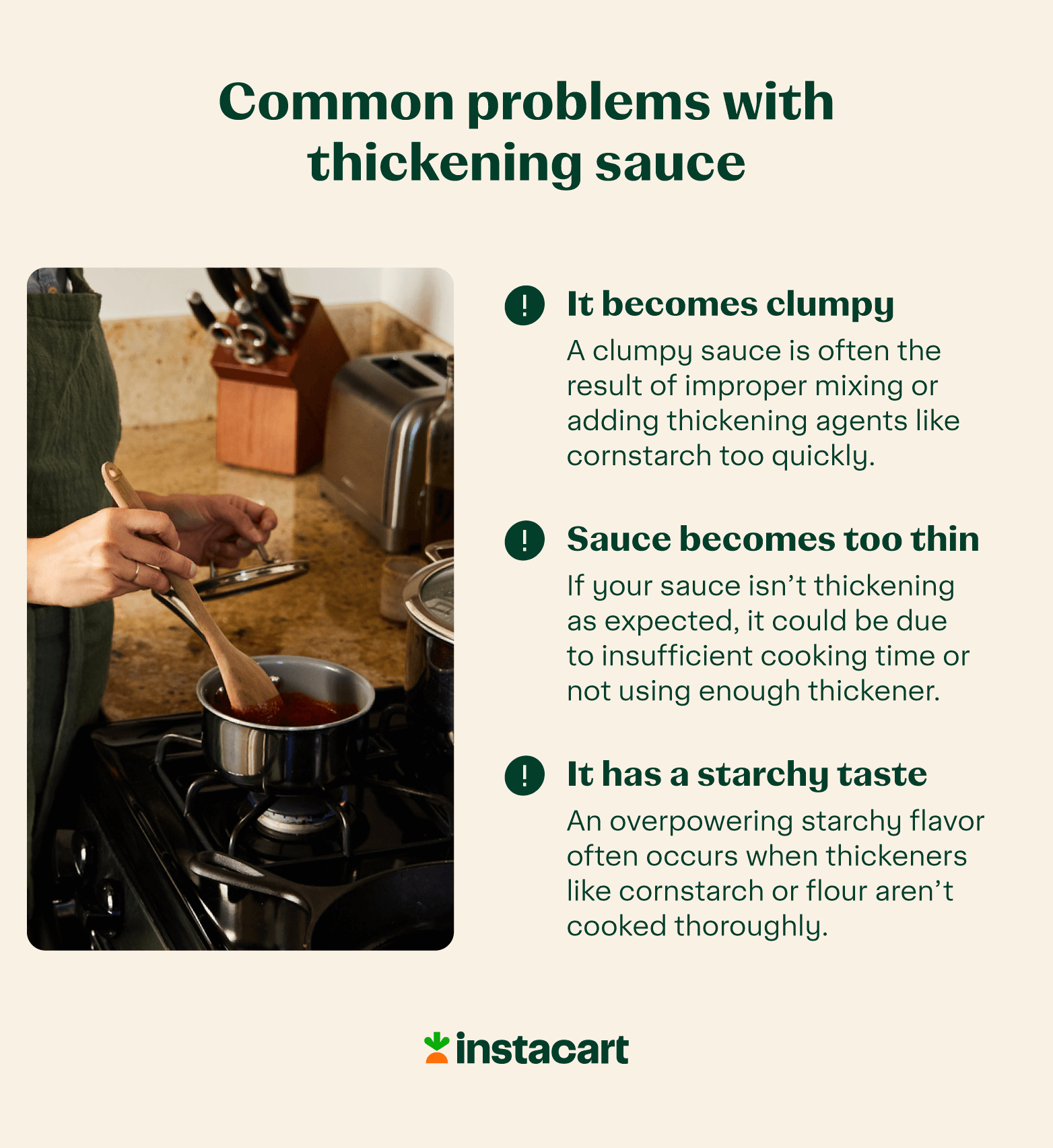
Sauce becomes clumpy
A clumpy sauce is often the result of improper mixing or adding thickening agents like cornstarch too quickly. When thickening with cornstarch, it’s crucial to dissolve it in cold water first to create a slurry before whisking it into the hot sauce. This ensures smooth incorporation and prevents lumps.
Sauce gets too thin
If your sauce is still too thin, it may simply need more time to cook and thicken. Simmer it uncovered to reduce excess liquid. Or slowly add more of your thickening agent, stirring well.
Sauce tastes starchy
You might get an overpowering starchy flavor if you used a thickener like cornstarch or flour but didn’t cook it thoroughly. To avoid this, simmer the sauce for a few minutes after adding the thickener.
Get the ingredients to fix your sauce with Instacart
Now that you know how to thicken sauce, it’s time to put these agents to work. Remember that you can use flour to thicken sauce if you don’t have a gluten sensitivity, or you can use cornstarch or arrowroot as a substitute thickening agent.
If you find yourself in a pickle and are in need of a food-thickening agent, you can place a same-day order with Instacart. Get your groceries delivered to your doorstep and skip the hassle of going to the store.

Course:
Recipes
Cuisine:
Sauces
Difficulty:
Easy
How to thicken sauce using cornstarch
Cornstarch is a gluten-free alternative to thicken sauce that won't alter the color or flavor.
Servings
Varies
Prep Time
5 min