


It’s no fun to bite into fruit that looks perfectly ripe but tastes like mush. And yet, this is a common occurrence in kitchens across the country. Fortunately, a few reliable produce ripeness tips can save you from disappointing meals and wasted groceries. The trick is knowing how a fruit or vegetable should look, feel, and smell, and even how heavy it should be for its size.
But picking perfectly ripe produce is only half the battle. Knowing which fruits and vegetables continue ripening after harvest can help you plan your meals ahead. And when you order fresh produce through Instacart, you can choose ripeness cues in your cart and get it from local stores for delivery or pickup. In this guide, we'll cover the telltale signs of ripeness for 11 fruits (and 5 tricky vegetables), how to speed up or slow down the ripening process, and which produce items to store separately to keep everything fresher for longer.
Use this chart to check ripeness at a glance, then scroll down for details on each type of produce.
Fruit | Characteristics of ripeness | Keeps ripening at home? | How to ripen faster |
Avocado | Gives slightly when gently squeezed | Yes | Paper bag at room temperature with an apple, banana or kiwi |
Bananas | Fully yellow peel with a few brown specks | Yes | Paper bag at room temperature |
Berries | Fully colored, plump and dry, with no mold | No | Won't ripen after picking; buy ready to eat |
Cantaloupe | Sweet smell at the stem end; yellow-beige rind under the netting | Softens, but won't get sweeter | No ripening trick; it won't get sweeter, so buy one that's already ripe |
Citrus | Firm and heavy for its size, with no soft spots | No | Won't ripen after picking; buy ready to eat |
Mangoes | Slight give when squeezed; fruity smell near the stem | Yes | Paper bag at room temperature |
Peaches and nectarines | Yellow background color and a gentle give near the stem | Yes | Paper bag at room temperature (don't refrigerate firm fruit) |
Pears | Flesh near the stem gives to gentle thumb pressure | Yes | Room temperature, near ripening bananas |
Pineapple | Heavy for its size, firm, sweet smell at the base | Softens, but won't get sweeter | No ripening trick; it won't get sweeter, so buy one that's already ripe |
Tomatoes | Deep, even color and a slight give | Yes | Room temperature, out of direct sun |
Watermelon | Heavy for its size with a creamy yellow ground spot | No | Won't ripen after picking; buy ready to eat |
How to tell if produce is ripe: 11 fruits to know
Choosing ripe produce includes understanding many nuances. Our list will help you know how to tell which type of produce is ripe and ready to enjoy.
1. Avocados
To tell if an avocado is ripe, hold it in your palm and give it a gentle squeeze. A ripe one should still feel somewhat firm, but you'll notice a little give when you apply light pressure. And remember that color isn't reliable, since some varieties stay light green when ripe, according to the California Avocado Commission.
If your avocado is hard, let it ripen in a paper bag at room temperature (65–75°F) for 2–5 days. You can also add an apple, banana, or kiwi to speed things up. Once ripe, a whole avocado will keep in the fridge for 2–3 days. For a weeklong supply, buy a mix of firm and soft avocados to spread them across the week.
2. Bananas
A banana is ripe when its peel is fully yellow with a few brown specks. For green, unripe produce, check out our guide on how to ripen bananas. The USDA Agriculture Handbook 66 recommends keeping the unripe bananas out of the fridge, since cold blackens the skin and will keep the fruit from getting sweet.
Once ripened, the fridge will buy you a little time before your bananas spoil. The peels will darken in the fridge, but the fruit will stay fresh a bit longer. Of course, everyone likes their bananas a little differently. Of Instacart banana orders that come with special instructions, nearly 40% mention the word "green." So, shop for bananas at the stage you need.
3. Berries
Ripe berries are fully colored and plump, and dry in appearance. They won't ripen after harvest, so you can buy them ready to eat. Strawberries should be red right up to the green cap, since pale tops (shoulders) won't fill in.
Skip containers with crushed or moldy berries, then refrigerate the fruit unwashed and eat within 2–3 days. Rinse them under running water right before eating. Avoid washing them with soap or commercial produce wash, per the FDA.
4. Cantaloupe
To tell if a cantaloupe is ripe, just smell the stem end for a sweet aroma and look for a yellowish-beige rind under the raised netting. The USDA Agriculture Handbook 66 recommends looking for a smooth, clean stem scar as a sign of ripeness. A bit of stem still attached suggests it was picked too early.
Cantaloupe also softens and gets juicier at home, but its sugar content won't increase. Once cut, you should cover and refrigerate the fruit immediately.
5. Citrus
Once picked, citrus doesn't ripen any further, so it's ready to eat when you buy it. Peel color varies, so choose fruits like oranges, lemons, and grapefruit that feel firm and heavy for their size, and skip any with soft spots or mold. And keep in mind that, according to StopFoodWaste.org, refrigerated citrus keeps up to 3 weeks if you need to stock up on oranges for any event.
6. Mangoes
To tell if a mango is ripe, squeeze it gently. As you squeeze, it should give slightly like a ripe avocado or peach, and it may smell fruity near the stem. The National Mango Board notes that skin color isn't a reliable sign, and the red blush on some varieties has nothing to do with ripeness.
Firm mangoes keep ripening at room temperature, faster in a paper bag, and ripe ones keep up to 5 days in the fridge. Keep this in mind if you’re shopping for mangoes for your next batch of homemade salsa or smoothie.
7. Peaches and nectarines
To tell if a peach is ripe, look past the red blush to the background color, which should be yellow or cream rather than green. Growers use that same color shift to time the harvest, according to UC Davis Postharvest: Peaches.
Don't refrigerate firm peaches or nectarines. UC Agriculture and Natural Resources: Storing Fresh Fruits and Vegetables for Better Taste found that stone fruit held at 36–46°F is prone to internal breakdown, which leaves the flesh mealy, brown, and flavorless, and home refrigerators usually run 38-42°F. Ripen them on the counter first. And remember to buy your peaches a few days before you need them.
8. Pears
Give the area around the pear's stem a gentle press with your thumb. If there's a little give, it's ready to eat. Pears ripen from the inside out according to USA Pears, so if the middle already feels soft, you've probably waited a bit too long. Color isn't always a reliable clue, either. Bartlett pears change from green to yellow as they ripen, while Anjou, Bosc, and Comice pears tend to look much the same.
Leave pears on the counter to ripen, then move them to the fridge once they're ready. This can help keep them fresh for 3–5 more days.
9. Pineapple
To tell if a pineapple is ripe, choose one that's firm, heavy for its size, and sweet-smelling at the base, because it won't get sweeter on your counter. According to UC Davis Postharvest, Pineapples hold almost no starch at harvest, so there's nothing to turn into sugar after picking.
According to USDA FoodKeeper, a whole pineapple keeps a few days in the fridge. Store cut pieces in a covered container.
10. Tomatoes
A ripe tomato has deep, even color for its variety and gives slightly when pressed. Pinkish tomatoes will finish ripening on the counter; keep them out of the fridge once they're ripe, too, since research from the University of Florida tomato study (PNAS) shows chilling ripe tomatoes dulls their flavor, even after they warm back up.
Tomatoes also give off ethylene, the natural gas that speeds ripening, so store them away from sensitive produce. (More on that below.)
11. Watermelon
You may have heard of the thump test, but thumping doesn't actually indicate ripeness, as the Clemson Cooperative Extension reveals. To tell when a watermelon is ripe, use the look, lift, and turn method from National Watermelon Promotion Board:
Look for a firm melon with no bruises or dents.
Lift it to check that it's heavy for its size (it's 92% water).
Turn it over to find a creamy yellow ground spot.
Keep whole watermelon at room temperature, since it loses flavor and color after a few days in the fridge. Refrigerate your watermelon once it’s been cut to keep it fresh for your next summer party.
Grab it now on Instacart


How to pick vegetables at their best: 5 tricky picks
Most vegetables don't ripen on the counter the way fruit does. They're harvested ready to eat and slowly lose quality from there, so the goal is choosing them at peak freshness and storing them well. Here's what to look for with five vegetables that can be hard to check for ripeness.
1. Corn
Choose corn with tight, fresh green husks and plump kernels that fill the ear. After picking, corn's sugar turns to starch, and warmth speeds that up. According to University of New Hampshire Extension: Sweet Corn, corn loses sugar 10 times faster at 70°F than at 32°F. Refrigerate it in the husk and cook it within a few days.
2. Bell pepper
Choose firm, glossy bell peppers with even color and no cracks or soft spots. You may have heard of the paper bag trick, which traps the ethylene gas that speeds ripening, but it won't help much here, since bell peppers respond very little to ethylene per UC Davis Postharvest: Bell Peppers.
If you choose a partly colored pepper, leave it at warm room temperature (68–77°F) to help it finish coloring. Green peppers are picked before they fully mature, and the shift to red, yellow, or orange means the pepper is ripening and getting sweeter. If your pepper is already fully colored, refrigerate it and use it within about a week.
3. Eggplant
Look for an eggplant that's firm and glossy, with dark skin and a fresh green cap. Eggplant is picked before its seeds harden, and overmature ones turn spongy and bitter according to NC State Extension: Eggplant.
Eggplant is sensitive to cold below 50°F, and chilling damage like pitting and browning can appear after 6–8 days at 41°F according to UC Davis Postharvest: Eggplant, so cook it within a few days. It's also ethylene-sensitive, so keep it away from apples and bananas.
4. Potatoes
Choose firm potatoes with no green patches or sprouts. Green skin signals light exposure, which also triggers solanine, a bitter natural compound that can cause stomach upset according to Michigan State University Extension. Cut out small green spots and sprouts, and throw away potatoes with a lot of green. Store potatoes in a cool, dark, dry place with good airflow, ideally 45–50°F, away from heat-producing appliances.
5. Squash
Look for winter squash with a dry, corky stem, a hard rind, and color typical of its variety. For butternut squash, look for an even tan rind; for how to tell if spaghetti squash is ripe, look for solid golden-yellow skin.
Store whole squash in a cool, dry spot around 55–60°F, where it can keep for months. Skip the fridge, since temperatures below 50°F cause chilling injury that shortens storage life.
How to ripen fruit faster
The easiest way to ripen fruit faster is a paper bag. A loosely closed bag holds the ethylene that ripening fruit gives off. Here's how to do it:
Place the fruit in a paper bag and fold the top over loosely.
Add a ripe apple or banana. Use one ripe apple per five to seven pieces of fruit as per UC Agriculture and Natural Resources; skip Fuji and Granny Smith, which give off little ethylene.
Keep the bag at room temperature, out of direct sun.
Check daily so the fruit doesn't overshoot.
Avoid sealed plastic bags, which slow ripening and can cause off-odors and decay. A vented bowl or perforated bag works better on the counter. And remember, this only works on fruit marked "yes" in the "keeps ripening at home" column of the table above.
How to slow ripening and store ripe produce longer
Once fruit hits its peak, you can buy yourself a little more time before it goes bad. These simple storage tricks can help slow the ripening process and preserve freshness, so you can enjoy your produce before it ends up in the trash.
1. Refrigerate fruit once it's ripe
Cold air slows ripening. Keep cut and pre-cut produce in perforated plastic bags in your fridge's crisper drawers, at 40°F or below per the FDA. Eat within a few days. For more, see our guide on how to store fruit.
2. Keep these out of the fridge
Some produce loses flavor or texture in the cold, so leave these on the counter or, for sweet potatoes, in a cool pantry:
Unripe bananas, which turn black and stop sweetening
Sweet potatoes, which develop off-flavors and a hard core
Whole watermelon, which keeps its flavor and color better at room temperature
Pink tomatoes, which won't turn red
Firm peaches and nectarines, which can turn mealy
3. Store ethylene producers away from sensitive produce
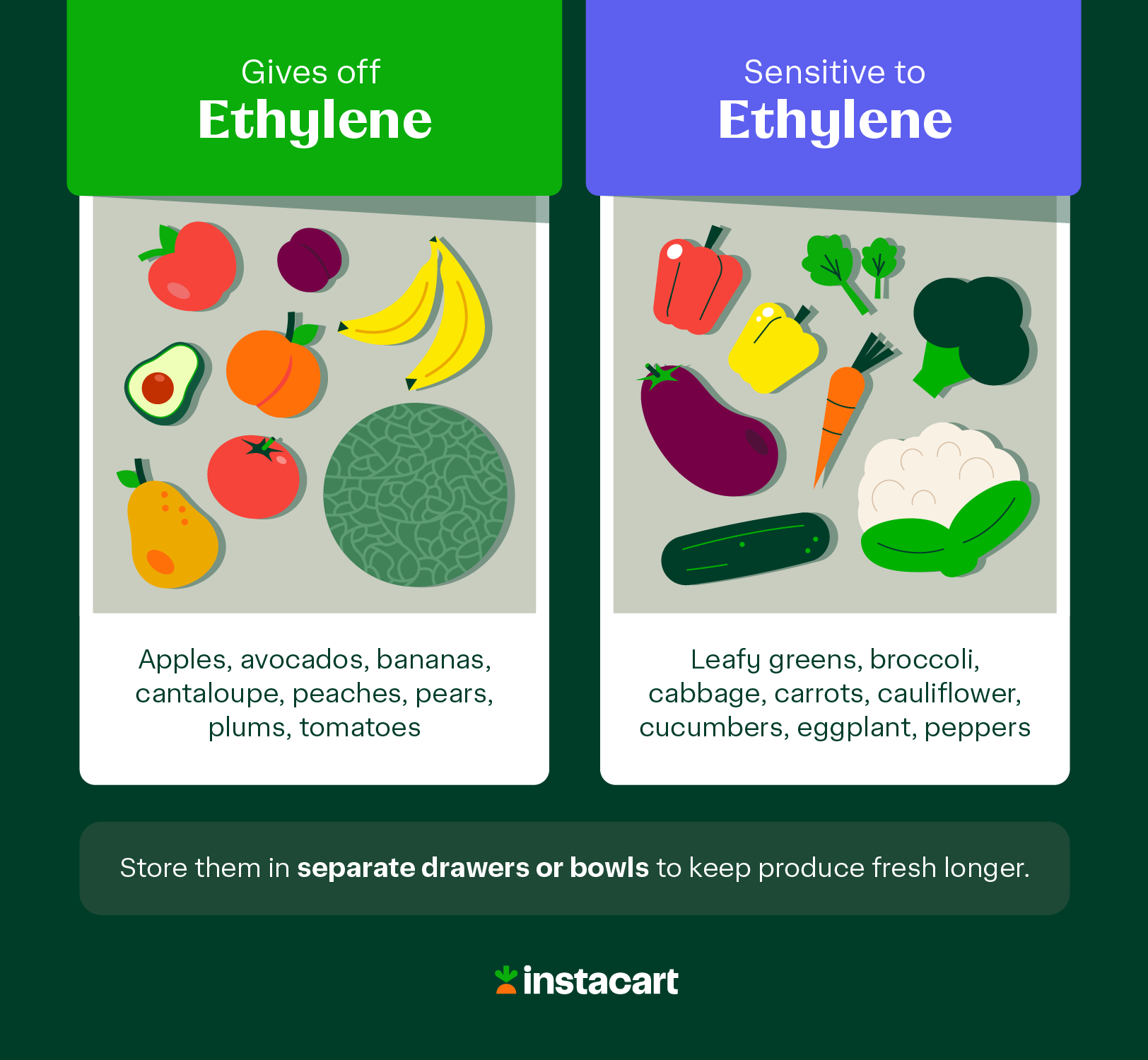
Ethylene can make nearby produce yellow or spoil faster, so it helps to use separate fridge drawers for fruits and vegetables. These fruits are the ones to keep apart:
Ethylene producers: apples, apricots, avocados, bananas (which also react to ethylene), cantaloupe, peaches, pears, plums and tomatoes
Ethylene-sensitive: lettuce and leafy greens, broccoli, cabbage, carrots, cauliflower, cucumbers, eggplant and peppers
Why some produce keeps ripening and some doesn't
Ethylene is a natural plant hormone that signals fruit to ripen. Apples, avocados, bananas, and peaches release a burst of ethylene, which is why they keep softening and sweetening after harvest.
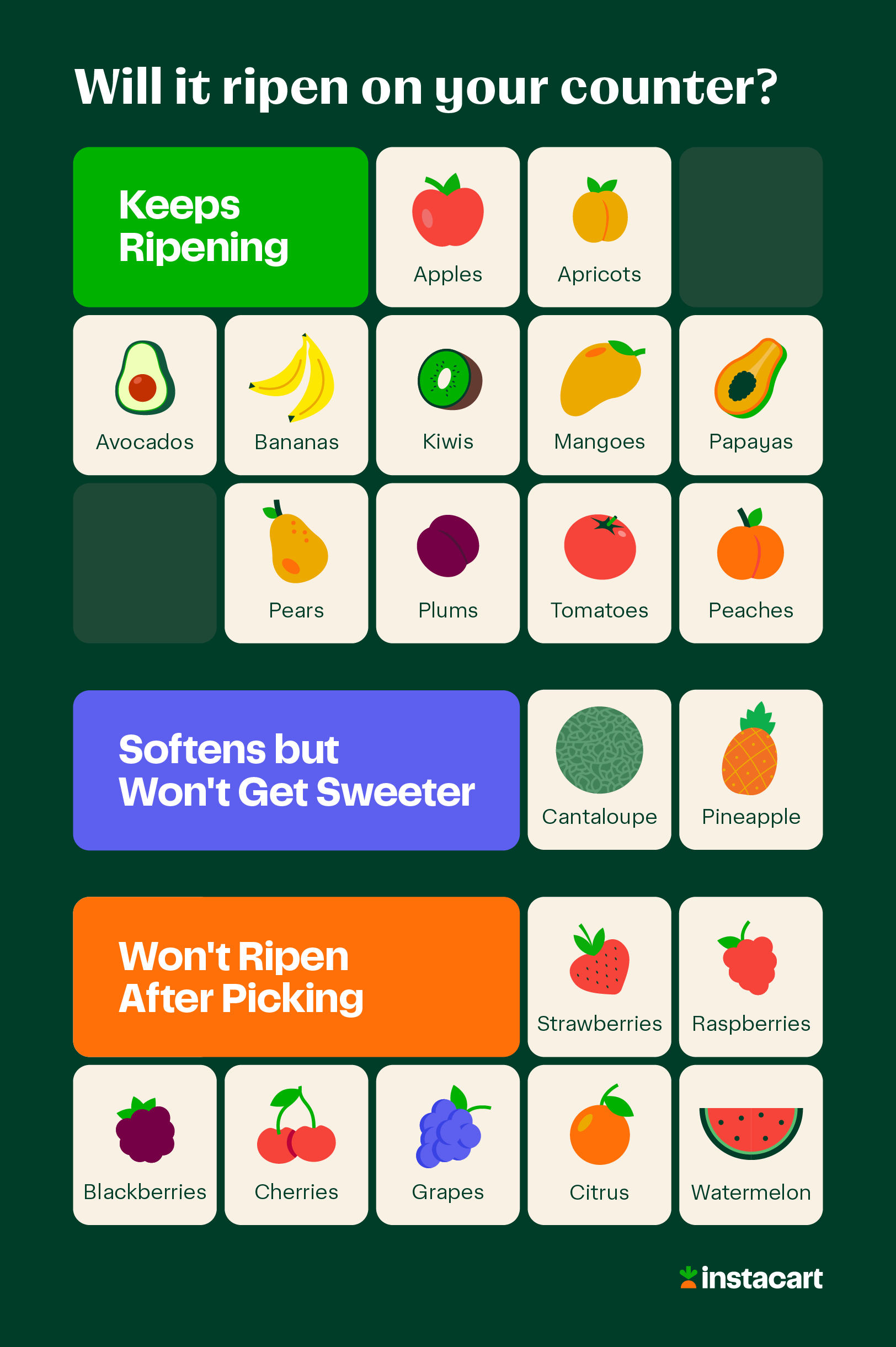
Climacteric fruits ripen after picking, while non-climacteric fruits, such as berries, citrus and grapes, are ripe when picked and only decline from there. Cantaloupe and pineapple are special cases. They soften on the counter but don't get sweeter, so pick them by aroma and weight.
How to get the right ripeness when you order groceries
When you buy a week’s worth of produce at once, plan for different stages. For example, consider a couple of ripe avocados for tonight and save a few firm ones for Thursday. Similarly, set aside yellow bananas for breakfast and keep the greener ones for later. Eat berries and pineapple early in the week.
When you order through Instacart, Preference Picker lets you choose banana ripeness, from “Not Ripe” to “Almost Ripe” to “Ripe,” at most retailers, and your Shopper shares a photo of what they picked. For other produce, add a Shopper note like "2 ripe avocados for tonight, 2 firm for later."
FAQ
What two fruits should not be stored together?
Apples and bananas are the classic pair to keep apart. Both give off ethylene, a natural gas that speeds ripening, so storing them in the same bowl can make your bananas ripen and brown faster. Also keep ethylene producers away from sensitive produce such as leafy greens, broccoli, cucumbers, and carrots, and use separate crisper drawers for fruit and vegetables.
What helps fruit ripen faster?
A loosely closed paper bag at room temperature, with a ripe apple or banana inside, speeds ripening for fruit that keeps ripening after picking, like avocados, mangoes, and pears.
Can you put fruit in the sun to ripen?
It's better not to. Keep countertop produce out of direct sunlight so it doesn't get too warm; a paper bag at normal room temperature works better.
What fruits do not continue to ripen after they're picked?
Berries, cherries, grapes, citrus, and watermelon won't ripen after harvest, so buy them ready to eat. Cantaloupe and pineapple soften on the counter, but neither gets sweeter.
Do plastic zip-top bags keep fruit fresh longer?
Sealed bags trap moisture and gases that can cause off-odors and decay. Perforated bags in the crisper drawer work better.
How can you tell if fruit is overripe?
Overripe fruit feels mushy, leaks juice, or has large brown bruises or black spots. A pear that's soft in the middle, for instance, is usually past its peak. Toss anything moldy, but put overripe bananas to work with these ideas for using ripe bananas.
Do vegetables ripen after they're picked?
Most don't; they're harvested ready to eat and slowly lose quality. The exceptions are fruits we cook like vegetables. Tomatoes keep ripening at room temperature, and partly colored bell peppers can finish coloring when kept warm.
Find fresh fruit at its best with Instacart
Judge your fruit by touch and smell, let it ripen in a paper bag if it needs a few days and refrigerate it once it's ready. Those 3 produce ripeness tips cover most of what you'll bring home.
When you're ready to restock, order through Instacart for delivery or pickup. Browse fruits in season for the best flavor, then enjoy them in these choice smoothie recipes.


