A carton of eggs can work for breakfast, lunch or dinner. This guide explains different ways to cook eggs, including fried, scrambled, poached, boiled, baked, steamed and microwave methods, with approximate times and tips for choosing the texture you want.
Cooking times vary based on egg size, starting temperature, cookware, appliance power and preferred doneness. For the lowest food-safety risk, cook eggs until both the yolk and white are firm. Use pasteurized eggs when a recipe will be served raw or undercooked, especially for children, older adults, pregnant people and anyone with a weakened immune system.
Not sure which carton to choose? Review brown eggs vs. white eggs before shopping.
Quick guide - 12 ways to cook eggs
Use these times as starting points. Adjust for your cookware, appliance and preferred level of doneness.
Method | Equipment | Approx. time | Typical texture |
Sunny-side up | Skillet | About 3–5 min | Set white; yolk can remain soft |
Over-easy, medium or hard | Skillet | About 3–6 min | Flipped; yolk ranges from runny to firm |
Scrambled | Skillet | About 3–5 min | Soft curds to firm curds |
Omelet | Skillet | About 5–8 min | Set exterior with folded filling |
Poached | Saucepan | About 3–5 min | Tender white; yolk varies |
Soft-boiled | Saucepan | About 4–7 min | Runny to jammy yolk |
Hard-boiled | Saucepan | About 10–12 min | Firm yolk and white |
Baked eggs | Oven | About 10–15 min | Tender white in a ramekin |
Frittata | Skillet + oven | About 15–25 min | Thick, sliceable egg dish |
Steamed eggs | Steamer or covered pan | About 10–15 min | Soft, custard-like texture |
Microwave scrambled | Microwave-safe bowl | 1–2 min total | Quick, fully set curds |
Microwave egg mug | Microwave-safe mug | 1–2 min total | Set egg with mix-ins |
Ways to cook eggs on the stovetop
Use a nonstick or well-seasoned skillet and adjust the heat as needed. Lower heat generally produces more tender eggs, while higher heat cooks faster but can make the whites or curds tougher.
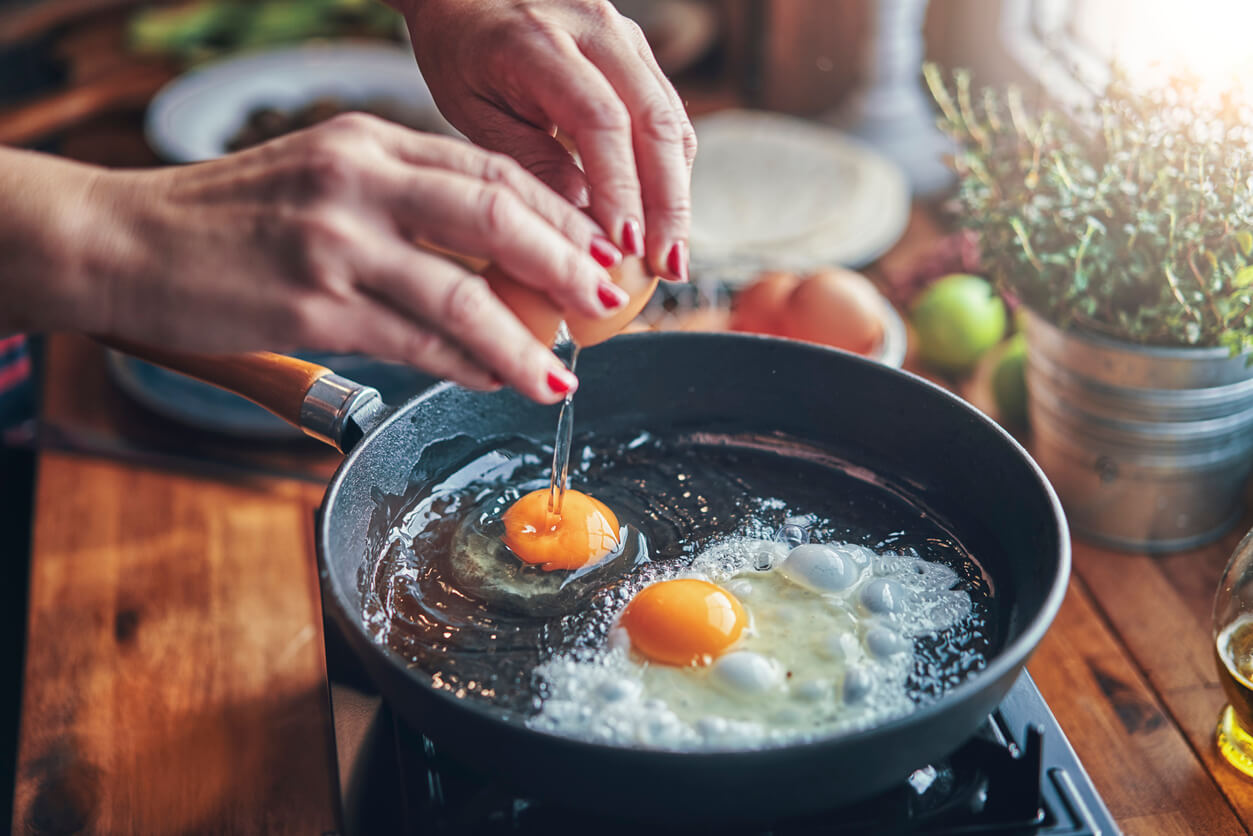
1. How to fry eggs: Sunny-side up
Possibly the simplest way to prepare your breakfast eggs. Grab your nonstick pan and some fresh whole eggs.
- Heat a small amount of butter or oil in a nonstick skillet over medium-low to medium heat.
- Crack the egg into a small bowl, then slide it into the pan to reduce the chance of shell pieces.
- Cook until the white is fully set. Covering the pan for the final minute can help the top of the white cook without flipping the egg.
- For the lowest food-safety risk, continue cooking until the yolk is firm. Use pasteurized eggs when serving a runny yolk.
2. How to fry eggs: Over-easy, over-medium or over-hard
Start the same way as a sunny-side up egg. Once the white is mostly set, slide a spatula underneath and carefully flip it.
Over-easy: Cook briefly after flipping so the yolk remains runny.
Over-medium: Cook longer so the yolk is partially set and jammy.
Over-hard: Continue cooking until the yolk is firm throughout.
Exact timing varies, so use the yolk texture rather than the clock alone to judge doneness.
3. How to make scrambled eggs
Once again, the secret to successfully scrambled eggs is a nonstick pan.
Crack the eggs into a mixing bowl and whisk until the yolks and whites are combined. Season with salt and pepper.
- Add a small splash of milk or cream for a softer texture, or leave it out for a more concentrated egg flavor.
- Melt butter in a nonstick skillet over medium-low to medium heat.
- Pour in the egg mixture and stir with a spatula, scraping the bottom and sides as soft curds form.
- Remove the eggs from the heat when they are fully set but still moist. Serve immediately.
For a deeper tutorial, see how to make scrambled eggs perfectly.
4. How to make an omelet
Think of an omelet as scrambled eggs that stay in one piece. The eggs cook in a thin layer before being folded around cheese, herbs, vegetables or other fillings
1. Whisk two or three eggs with salt, pepper and an optional splash of milk.
2. Heat butter or oil in a nonstick skillet over medium heat.
3. Pour in the eggs and tilt the pan so they spread evenly.
4. As the edges set, pull them gently toward the center and allow the uncooked egg to flow underneath.
5. Add cooked fillings such as cheese, herbs or vegetables to one side, then fold the omelet and cook until the center is fully set.
Cook wet vegetables and raw meat before adding them so they do not release excess liquid or remain undercooked inside the omelet.
Ways to cook eggs on the stovetop
Poaching and boiling cook eggs without adding fat. Use gentle heat for poached eggs and a timer for consistent boiled-egg texture.
1. How to poach eggs
Poached eggs can take a little practice, but gentle heat makes the process easier. Crack each egg into a small cup first so you can slide it into the water without breaking the yolk.
Fill a saucepan with several inches of water and bring it to a gentle simmer rather than a rolling boil.
Crack each egg into a small ramekin or cup.
Add a small splash of vinegar to the water if desired; it can help loose whites set more quickly.
Slide the egg gently into the water and cook until the white is fully set. A soft yolk often takes about three to four minutes, while a firmer yolk needs longer.
Remove the egg with a slotted spoon and blot away excess water before serving.
For a fully cooked egg, continue poaching until the yolk is firm. Use pasteurized eggs when serving a soft or runny yolk.
2. How to make soft-boiled or jammy eggs
Soft-boiled eggs have firm whites and yolks that can range from runny to creamy and jammy. A few extra minutes can completely change the center, so keep a timer nearby.
1. Bring enough water to cover the eggs by about an inch to a boil.
2. Lower cold eggs carefully into the water with a spoon, then reduce the heat to a gentle simmer.
3. Cook for about four to five minutes for a very runny yolk or six to seven minutes for a creamier, jammy center.
4. Transfer the eggs to an ice bath to stop the cooking, then peel gently.
Soft-boiled eggs are intentionally undercooked. Use pasteurized eggs or choose hard-boiled eggs when serving people at higher risk of foodborne illness.
Two ways to boil eggs
A perfectly boiled egg is one of the most versatile foods. Enjoy them fresh from the pot with hot buttered toast for a wholesome breakfast, or pop them into lunchboxes for a protein fix on the run. Boiling an egg is fairly simple, but getting the yolk just right can be quite tricky. Here are two different methods for perfectly boiled eggs.
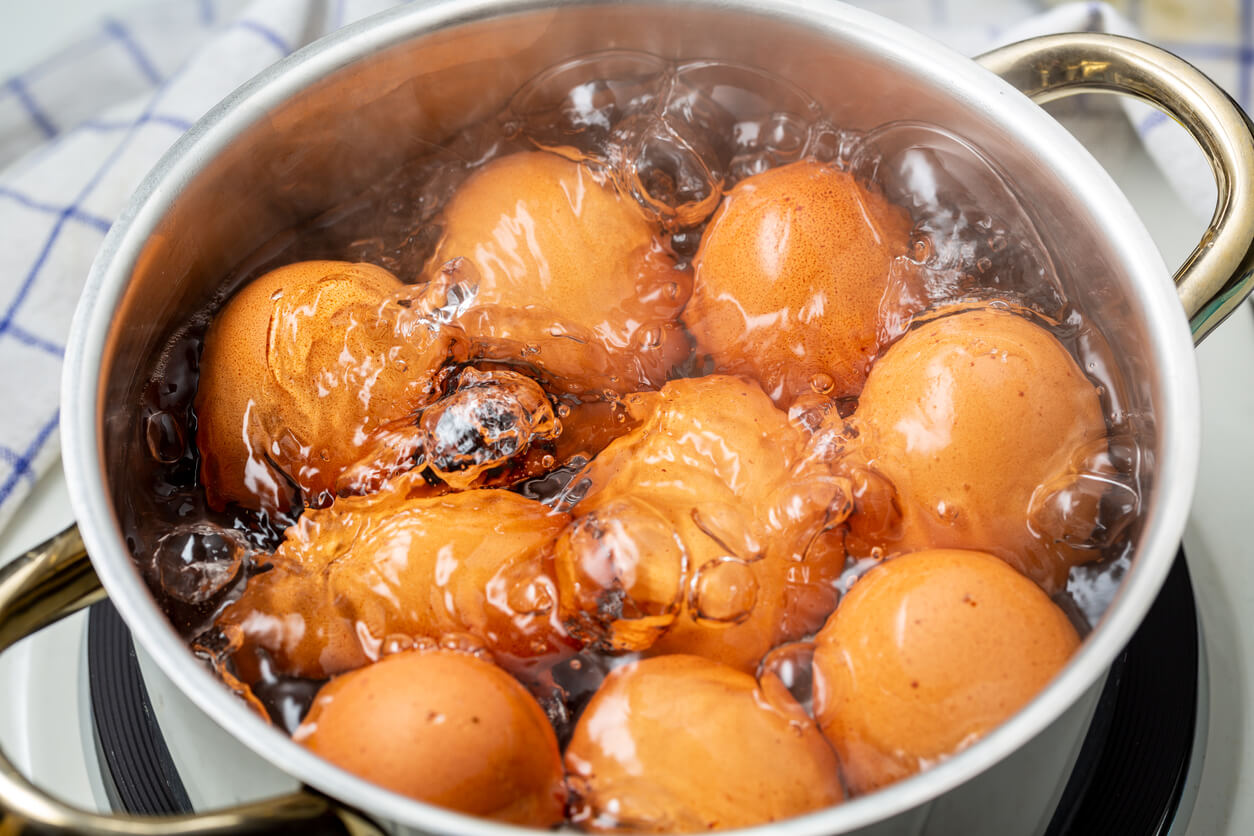
1. How to boil eggs: The cold-water method
Place eggs in a pot and cover with cold water. Do not crowd the eggs. Bring the water to a boil. Once the water is boiling, cook the eggs for the following length of time according to how you like your eggs:
- Soft-boiled eggs: Boil for two minutes.
- Medium eggs: Boil for two to three minutes.
- Hard-boiled eggs: Boil for seven minutes.
2. How to boil eggs: The hot-water method
Fill a saucepan with enough water to cover the eggs once you put them in. Place the pan on high heat and bring to a boil. When the water has reached boiling point, gently lower the eggs into the water. Set a timer for the following number of minutes according to your preference:
- Soft-boiled eggs: Boil for three to four minutes.
- Medium eggs: Boil for six to eight minutes.
- Hard eggs: Boil for ten minutes.
Tips for boiling the perfect egg
- To prevent the egg yolks from discoloring, remove the eggs from the boiling water and place them in a bowl of iced water for a few minutes.
- For the best predictions of cooking time and to prevent the eggs from cracking, use room temperature eggs.
- Fresh eggs are easier to peel.
- Add a teaspoon of white vinegar to the cooking water to prevent the egg white from seeping if the eggshells do accidentally crack.
See the full five-step guide to boiling eggs for timing, peeling and storage tips.
Have a few hard-boiled eggs left over? Explore these boiled egg recipe ideas, including salads, sandwiches and deviled eggs.
Ways to cook eggs in the oven or with steam
Baking and steaming are useful when you want to cook several servings at once or add vegetables, cheese and other fillings without standing over the stove.
How to bake eggs in ramekins
Baked eggs, sometimes called shirred eggs, cook gently in individual oven-safe dishes.
1. Preheat the oven to 375°F and lightly grease one ramekin per serving.
2. Crack an egg into each ramekin and add seasonings or cooked toppings.
3. Place the ramekins on a baking sheet and bake for about 10 to 15 minutes, checking early.
4. Remove the eggs when the whites and yolks reach your preferred doneness. For the lowest safety risk, cook until both are firm.
How to make a frittata
A frittata is a thick, sliceable egg dish that can use cooked vegetables, cheese, herbs or leftover meat.
1. Preheat the oven to 350°F.
2. Whisk eggs with salt, pepper and an optional splash of milk.
3. Cook any vegetables or meat in an oven-safe skillet before adding the eggs.
4. Pour in the egg mixture and cook briefly on the stovetop until the edges begin to set.
5. Transfer the skillet to the oven and bake until the center is fully set, usually about 10 to 15 minutes depending on depth.
Egg dishes such as frittatas and casseroles should reach 160°F in the center.
How to steam eggs
This method turns whisked eggs and warm broth into a soft, spoonable custard. Gentle steam keeps the texture smooth and delicate.
1. Whisk eggs with warm water or broth and a small pinch of salt.
2. Strain the mixture into a heat-safe bowl for a smoother texture.
3. Cover the bowl loosely with a plate or foil to keep condensation from dripping into the eggs.
4. Steam gently until the custard is set throughout, usually about 10 to 15 minutes depending on the bowl and depth.
5. Serve immediately with herbs, soy sauce or cooked vegetables.
Ways to cook eggs in the microwave
When you need eggs quickly, the microwave can handle a scramble or egg mug in just a few minutes. Because wattage varies, cook in short intervals and stir often.Never microwave an egg in its shell because pressure can build and cause it to burst.
1. How to make scrambled eggs in the microwave
Microwave scrambled eggs are useful for busy mornings or kitchens without a stovetop.
Crack the eggs into a microwave-safe bowl and whisk with seasonings and an optional splash of milk.
Cover loosely and microwave for 30 seconds.
Stir thoroughly, then continue microwaving in 15- to 30-second intervals, stirring after each interval.
Stop when the eggs are fully set and no liquid egg remains. Let them stand covered briefly before serving
2. How to make a microwave egg mug
A microwave egg mug combines beaten eggs with small amounts of cooked vegetables, cheese or other ready-to-eat fillings.
Coat a large microwave-safe mug lightly with cooking spray or butter.
Add one or two eggs and whisk with seasonings.
Stir in small pieces of cooked vegetables, cheese or fully cooked meat. Leave room at the top because the eggs will expand.
Cover loosely and microwave for 30 seconds, stir, then continue in short intervals until the egg is fully set.
Let the mug stand covered briefly, then confirm that the egg is firm throughout and no liquid egg remains before serving.
A few egg-safety basics
Buying and storing: Choose clean, uncracked eggs and refrigerate them promptly.
While cooking: Wash hands and tools after handling raw eggs.
Checking doneness: Cook egg dishes to the recommended temperature.
Saving leftovers: Refrigerate cooked eggs within two hours.
A few egg-safety basics
- Using heat that is too high: This can brown or toughen the whites before the yolk or center is cooked.
- Skipping a timer for boiled eggs: A few minutes can change the yolk from runny to jammy or fully firm.
- Crowding the pan: Eggs are harder to flip or stir evenly when the skillet is too small.
- Adding watery fillings without cooking them first: Mushrooms, spinach and tomatoes can make omelets and frittatas watery.
- Relying on a universal microwave time: Wattage and serving size change how quickly eggs cook.
- Microwaving eggs in the shell: Steam pressure can cause the egg to burst.
Frequently asked questions:
What are the most common ways to cook eggs?
Common methods include frying, scrambling, poaching, boiling, baking, steaming and microwaving. Eggs can also be used in omelets, frittatas, casseroles and other mixed dishes.
What is the easiest way to cook eggs?
Scrambled eggs are beginner-friendly because there is no flipping or careful shaping involved. Hard-boiled eggs are also simple when you use a timer and transfer them to an ice bath after cooking.
How do I know when eggs are fully cooked?
For shell eggs cooked on their own, the FDA recommends cooking until both the yolk and white are firm. Scrambled eggs should be firm throughout, and egg dishes such as casseroles should reach 160°F.
Can I cook eggs in the microwave?
Yes. Beat eggs in a microwave-safe bowl or mug, cover loosely and cook in short intervals, stirring between intervals until fully set. Never microwave an egg in its shell.
Should eggs be at room temperature before boiling?
Room-temperature eggs are not required. Starting with refrigerated eggs and using a consistent method makes timing easier to repeat. Lower the eggs into hot water carefully to reduce cracking.
Are fresh eggs easier to peel?
Very fresh hard-boiled eggs can be more difficult to peel. Cooling cooked eggs in an ice bath and peeling them under running water can help loosen the shell.
Can I eat eggs with a runny yolk?
Runny yolks are undercooked and carry more food-safety risk than fully cooked eggs. Use pasteurized eggs when serving eggs raw or undercooked, and fully cook eggs for people at higher risk of severe foodborne illness.
Order eggs and cooking essentials with Instacart
Once you choose an egg-cooking method, order eggs, fresh produce, butter, milk and cooking tools from retailers available near you through Instacart. You can also shop for nonstick pans, whisks, ramekins and food thermometers before trying a new technique.
Browse stores available in your area and choose delivery or pickup where offered. Availability, pricing and timing vary by retailer and location.
Running out of eggs while baking? Review these substitutes for eggs in baking. For make-ahead inspiration, explore breakfast meal prep recipes or try one of these breakfast sandwich recipes!